macOS Golden Gate Public Beta: 10 Features to Try First
macOS 27 Golden Gate is available to public beta testers starting this week, which means you can try out Siri AI and the other changes coming in the update before it launches this fall.
We don’t recommend beta builds for devices that serve a critical function, and it’s always best to test on a secondary device. macOS Golden Gate is a stable beta compared to previous versions, but it is still in development and there may be some bugs to work out. Before installing the update, be sure to create a Time Machine backup so you can return to macOS Tahoe if you need to.
Liquid glass
Apple added a Liquid Glass slider in macOS 27 and you can adjust the transparency level. You can select a lighter version of Liquid Glass that lets some of the background show through, or a more opaque version for better readability. Since it’s a slider, you can also choose something in between.
Apple also changed the overall opacity of Liquid Glass, which better diffuses complex content behind navigation bars and buttons. Dark edges and brighter specular highlights add more depth and separation to different UI elements.
Uniform toolbars across apps make text titles and groups of commands more readable, and Apple has reduced the number of icons used in menu interfaces. Windows has the same corner radius for consistency, and you’ll notice that app corners aren’t as radically rounded.
Changes to window shadows and updates to Liquid Glass make it much easier to determine which window is active when you have multiple apps open.
The sidebars no longer float and are edge to edge, making for a less obtrusive design. Sidebar icons also use color.
Siri AI
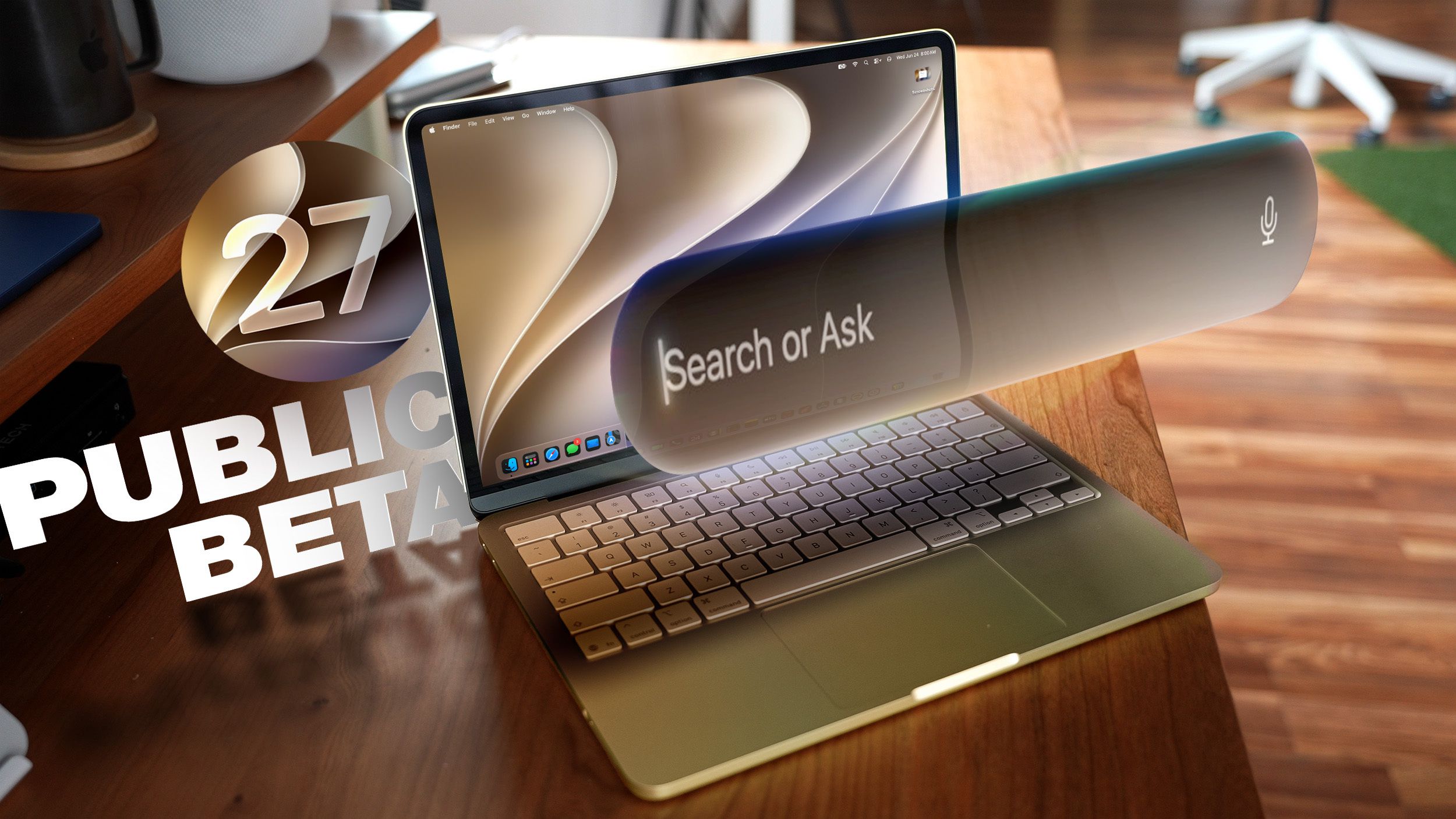
The Siri AI is the biggest change in macOS Golden Gate. Siri is smarter, more efficient and works like a chatbot. On Mac, you can ask Siri anything using the Spotlight interface that comes with Command + Space. Spotlight is now a unified “Find or Ask” bar where you can search for files, apps, and other content, or ask Siri to perform tasks or respond to queries.
You can also interact with Siri using the dedicated Siri app, where you can view past conversations and start new conversations. Siri conversations sync across all your devices and the Siri app is cross-platform.
Siri can see what’s on your screen and access your personal information such as emails, messages and photos to answer questions. Siri can also search the web and perform tasks in apps for you. This is a huge change from the previous version of Siri, and Siri can handle a lot more than before.
We learn more about some of the tasks you can do with Siri in our Siri AI guide.
Visual intelligence
Apple introduced the iPhone’s Visual Intelligence feature to Mac in macOS 27. You can ask Siri questions about what’s on your screen with Visual Intelligence, choosing the entire screen or just part of it.
Visual Intelligence on Mac works when you press Command+Shift+Space or Command+Shift+6 to capture an area of the screen. If you press Command+Shift+5 (also used to record your display and capture screenshots), you can click the Visual Intelligence icon to get an adjustable selection square for selecting an area of the screen.
Siri can search for images, summarize, translate, identify objects, add information from the screen to apps like Calendar or Reminders, answer questions about what you’re looking at, and much more. Visual Intelligence on Mac has all the same features as Visual Intelligence on iPhone, and includes new Visual Intelligence features like giving you nutritional information on foods or splitting a bill.
Write with Siri
There is a system-wide Write with Siri feature that goes beyond the Apple Intelligence writing tools available in macOS Tahoe. Siri can write entire emails or messages for you, give you feedback on your writing, edit words, and perform other editing tasks.
To use Write with Siri on Mac, right-click an app and choose the Ask Siri option. If you select text before right-clicking, you can ask Siri for help with editing. If you have a blank document, you can ask Siri to generate something for you. When writing emails or messages, Siri can analyze your past communications and generate something in your own writing style.
Apple has also expanded spell checking in macOS Golden Gate, and your Mac will now offer you grammar suggestions and fixes as well.
Mirroring iPhone
You can resize the iPhone Mirroring window in macOS Golden Gate, by dragging the corner to make the window larger or smaller. Depending on the app, you may be limited to an iPhone portrait format, but other apps support iPad or landscape layouts.
Shortcuts
It’s easier for anyone to create a shortcut in just a few minutes in macOS Golden Gate. The Shortcuts app on Mac opens to an interface that lets you describe what you want a shortcut to do using natural language.
The AI creates the shortcut for you and you can refine it with other natural language commands or edit it manually. You can activate your shortcuts through the app or with Siri commands.
Safari Extensions
Safari has a customizable extension feature in macOS Golden Gate, and you can use the Describe Extension option to enter what you want an extension to do. The extension is created using AI and can be used immediately.
To use it, click the settings icon on the right side of the URL bar and choose the Describe extension option. Some Apple examples:
- Display an estimated reading time as a badge on the extension
- Close duplicate tabs pointing to the same URL when I click on the extension
- Highlight this word
- Create a 3 minute focus timer for the page
- Set the minimum font size to 14 pt
- Every time I open a new tab, draw me a flower
- Highlight and show dimensions of web page elements when I click on them
- Switch to design mode for a website so I can edit the content
- Save this recipe
Safari tab grouping and notifications
Safari also has a smart tab grouping feature. Tabs from related categories are automatically grouped in the tab view.
You can also configure Safari to monitor updates to a web page, with hourly, daily, weekly, and monthly checks available. When you configure this feature, you will receive a notification when the content of the web page changes.
Performance Improvements
In addition to introducing Siri and new Apple Intelligence features, macOS Golden Gate cleans up the underlying code. Apple has made several improvements to speed up performance.
Animations and interactions are faster and smoother, and you’ll notice a difference when you scroll through Safari and other apps, open Mission Control and Spaces, and use other elements of the Mac interface.
AirDrop transfers run faster, file browsing on connected network devices is faster, and window positioning is more stable when using external displays. Messages also sync faster and more reliably across devices.
Apple has rebuilt its search base for Spotlight, Photos, Mail and Messages, and indexing is faster. When you search for something recent, it’s more likely to appear immediately than before, and in Mail there’s a ranking system that surfaces the emails you’re most likely looking for. Mail search indexing is more reliable than before and Spotlight search suggestions are more relevant.
How to install
Sign up on Apple’s beta testing website, then open the System Settings app. From there, click General > Software Update and under the Beta Updates section, click the “i” to choose macOS 27 Golden Gate Public Beta.
After that, you can install macOS Golden Gate like any other software update.
System Requirements
macOS Golden Gate works on Macs with an M1 chip or later, as well as the MacBook Neo A18 Pro. Intel Macs do not support macOS Golden Gate and will not benefit from the new features.
Every Mac that runs macOS Golden Gate supports Apple Intelligence and Siri AI, but some Siri processing features on the device for selecting a natural voice and getting upgraded dictation require an M3 or later.
The Siri AI is not available in the European Union or China at this time, nor will it be available when the update launches this fall.