
There’s never been a better time to become a Linux gamer. Over the past few years, Linux gaming has made some pretty big strides, and none of it has been wrapped up in flashy marketing or benchmark graphics. This change has been buried deep in kernel patches, memory controllers, and the type of engineering work that most people may never see, but will absolutely feel.
If you’ve ever seen your GPU choke as the VRAM fills up, you’ll understand exactly what Valve just did. Modern games and their VRAM requirements have increased significantly, leading many people to be convinced that GPUs with 8GB of VRAM are now obsolete. While this is a separate and much longer conversation, someone at Valve just decided that for Linux gamers, gaming should come first.
You don’t need to wait for the Steam Machine – I built my own
I can’t wait for pre-orders to open
A kernel-level fix that finally prioritizes your game
Top-tier applications now get first access to VRAM

A new batch of kernel-level fixes brings a fundamental change to how Linux handles GPU memory under pressure. These new Linux kernel patches, created by one of Valve’s Linux graphics engineers, change the way allocations and evictions are handled. In simple terms, the system now includes prioritization. The game you are actively running will no longer be treated the same as a background browser tab or composition process.
With the new kernel patch, the system ensures that the game running on your machine will receive priority and dedicated VRAM. Before everything dumps into system memory. For anyone using 8GB of VRAM, watching your VRAM data overflow into RAM is basically a rite of passage. But this overflow was never the main problem. The bigger issue is how, in cases like these, critical game resources can be evicted while lower priority apps running in the background remain resident. The PC essentially decides to evict a critical texture or vital shader just to keep a low-priority background application comfortable in the high-speed lane. This imbalance caused stutters, glitches, and frustrating performance drops that never really showed up in average FPS graphics.

Linux is slowly taking over my PC gaming life
This is happening right under my nose.
This might make it seem like 8GB of VRAM is enough
The Steam Machine’s biggest criticism is losing some weight
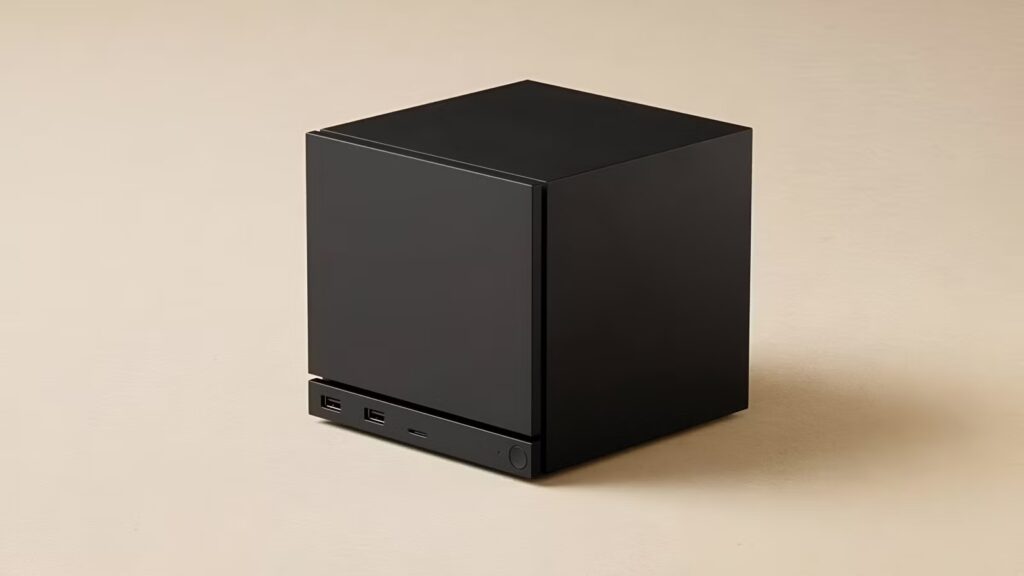
This is where things clearly get interesting for the next Steam Machine. The whole conversation about 8GB of VRAM not being enough has been based on systems behavior. Todaynot how they might behave with smarter memory management. And more importantly, this new feature is tailor-made for discrete GPUs, which is precisely the type of hardware the Steam Machine is intended to use.
Now, this won’t magically transform shared memory devices like the Steam Deck or other handhelds, since the VRAM and system memory of these devices exist in a unified pool. For a home box with a dedicated GPU running SteamOS, this is a direct and tangible benefit. The Steam Machine has been criticized pretty harshly for its low VRAM, but this change significantly reframes that criticism. Internal testing already suggests that better prioritization leads to more consistent use of available VRAM, especially in extreme cases where older behavior would have absolutely offloaded critical data.

Valve could replace some Steam internal customer support with AI
SteamGPT may soon tackle some customer support tickets and anti-cheat monitoring
No, this does not reduce VRAM usage
It just makes every GB count more

Let’s be clear about what this does not means: This does not reduce VRAM usage. Games that require more than 8 GB will always require more. Titles like Hogwarts Legacy Or Alan wakes up 2 aren’t going to suddenly become lightweight titles (although that might come later with Nvidia’s NTC). What is this do The change, however, lies in how efficiently VRAM is used and how much of it is actually available for gaming when it matters most.
The result is remarkably better usability. Instead of prematurely scattering data across slower system memory, the GPU retains critical resources longer, allowing it to perform closer to its full potential. In an example, Cyberpunk 2077 was able to increase VRAM usage up to almost 7.4 GB, while GTT usage dropped to around 605 MB. This marks a fundamental change in behavior, as even GPUs with limited VRAM can now stretch their legs properly, delivering smoother frame pacing and fewer of those jarring, immersion-breaking peaks.
The Steam Machine will thus ensure that the 8 GB of VRAM of its discrete GPU are fully used in the current game. We’ve already seen recent SteamOS updates laying the groundwork for OS expansion, as well as tiny quality-of-life updates that are clearly setting the stage for the Steam Machine’s release in late 2026 (hopefully).

SteamOS 3.8 significantly improved many handhelds, except for the Steam Deck itself
It’s time for SteamOS to start branching out
This is what the Steam Machine is trying to be
Valve’s software and hardware will together redefine the living room PC
Focusing only on VRAM misses what the Steam Machine is trying to accomplish. The Steam Machine is not at all meant to be a spec-by-spec arms race against high-end PCs. Instead, it’s meant to be a gateway to PC gaming in the living room. Its goal is to be a real alternative to something like the PlayStation 5, especially at a time when Xbox has largely moved away from that space in any significant way.
Coupled with kernel-level control over the behavior of VRAM and system memory under gaming loads, and combined with the maturity of AMD’s scaling solutions like FSR, this looks like a very intentional design philosophy. The Steam Machine is shaping up to be a force to be reckoned with for those who want to continue PC gaming even in their living room, but can’t be bothered with $2,000 machines or porting their existing platforms to the TV.
For many newcomers in 2027, a sub-$1,000 Steam machine will be the first step toward legitimate PC gaming. Just like the PlayStation, Xbox or Switch, this will be a purpose-built game box with unified hardware. It’s one piece of hardware, one ecosystem, and one place to troubleshoot. For many players, this simplicity will mean a lot, and for others, perhaps even more than raw power.

Someone has already created a Steam Machine competitor, and it costs a pretty penny
It’s for sale right now, so it has more than Valve.
Another type of new generation Inefficiency in the PC gaming space has been normalized to a remarkable extent.
What Valve is doing here doesn’t scream next-gen in the traditional sense. In fact, many would argue that its modest specs make it barely comparable to current-gen hardware. However, it still redefines how hardware is used, without focusing solely on the raw power under the chassis.
Like it or not, PC gaming – Linux or Windows – exists in a space rife with inefficiency, and it has even been normalized to some extent. Valve’s recent kernel-level patch appears to be a significant step in the right direction, one that will ensure that you can get the most out of the hardware you’re paying for.
