
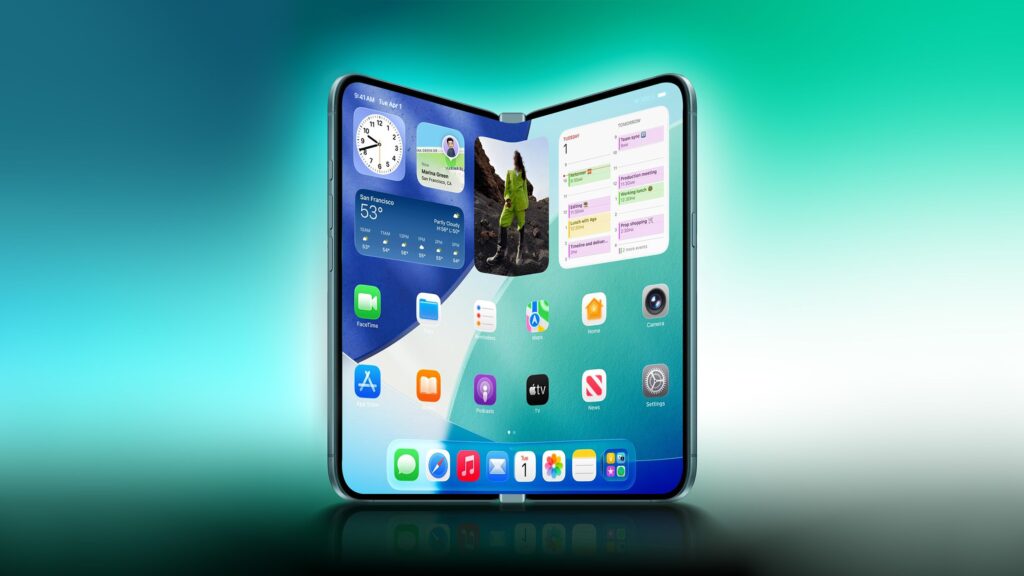
Apple’s first foldable iPhone will feature an innovative liquid metal hinge and has now shipped prototypes to carriers around the world for testing, the leaker known as “Fixed Focus Digital” announced today.
In a new post on Weibo, Fixed Focus Digital said that development and production related to the foldable is “now progressing rapidly.” This claim comes a day after the leaker announced that the foldable iPhone would feature vapor chamber cooling.
The liquid metal hinge detail is significant in light of the ongoing debate over the device’s production difficulties. Previous reports from the leaker known as “Instant Digital” attributed the manufacturing issues to the hinge failing to pass Apple’s quality control standards during prolonged, high-frequency opening and closing tests. Fixed Focus Digital previously pushed back against this characterization, arguing that the hinge was not the primary source of difficulty, and today’s post appears to position the hinge as a resolved and confirmed element of the design.
Liquid metal is an amorphous metal alloy with a significantly higher strength-to-weight ratio than conventional metals, as well as superior resistance to corrosion and wear. Apple has used liquid metal in limited contexts before, including for the SIM card ejector tool included with iPhones and for some internal components, but applying it in a structural hinge mechanism would require much more demanding use of the material. The foldable iPhone is expected to bend and unfold hundreds of thousands of times over its lifespan, putting exceptional strain on the hinge, and the durability properties of liquid metal make it a better performing material than conventional alloys.
Apple’s history with liquid metal dates back more than 15 years. In 2010, Apple signed an exclusive agreement with Liquidmetal Technologies, receiving a perpetual worldwide license to market the material in consumer electronics. In the years since, the company has used liquid metal only for minor components such as the SIM ejector tool, as the material proved difficult to scale for larger structural parts. Apple has repeatedly renewed its deal with Liquidmetal Technologies, and the material has continued to surface in patent filings covering hinges and other moving parts.
Supply chain analyst Ming-Chi Kuo first reported in March 2025 that the hinge of the foldable iPhone would use liquid metal, with Dongguan EonTec named as the exclusive supplier of the alloy. A subsequent supply chain report from January corroborated plans for liquid metal hinges, but in April, Fixed Focus Digital questioned the choice of material, saying Apple was still weighing liquid metal versus 3D printed titanium alloy.
The claim that prototypes have reached global carriers for testing represents a significant milestone, suggesting that the device is now complete enough to undergo the network compatibility and carrier certification process that precedes commercial launch. DigiTimes reported in April that mass production was expected to begin in July, and BloombergMark Gurman reported that the device remains on track for a September launch alongside the iPhone 18 Pro and iPhone 18 Pro Max, although he noted that the timing was not yet final at the time of writing.
The foldable iPhone is expected to feature a 7.8-inch inner display, a 5.5-inch cover display, the A20 chip, the C2 modem, Touch ID in place of Face ID, and dual rear cameras, with pricing expected to start at around $2,000.
