
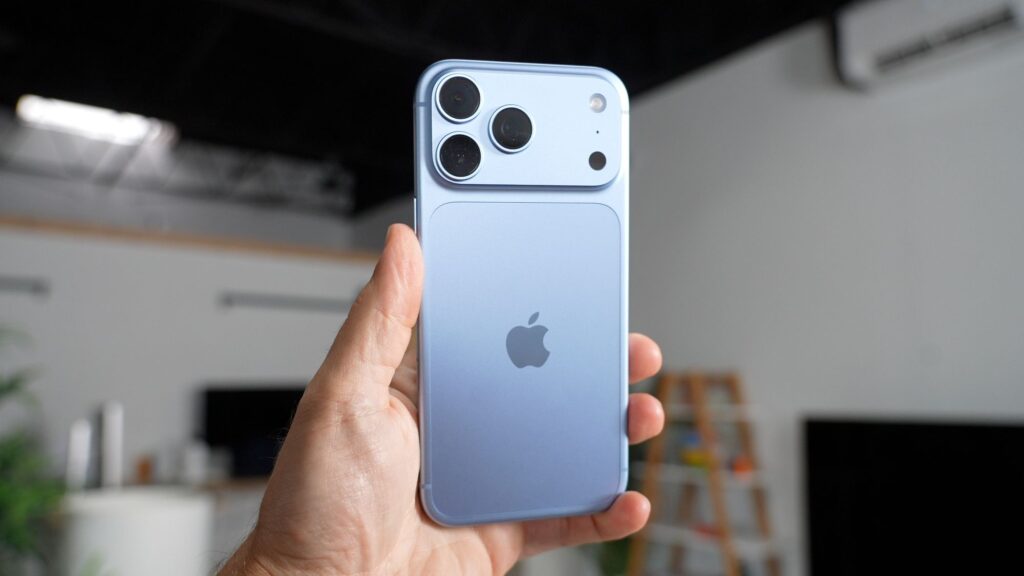
The iPhone 18 Pro and iPhone 18 Pro Max launch tomorrow, but we were able to get one early to share some first impressions.
Both the 18 Pro and Pro Max are heavier than the iPhone 17 Pro and Pro Max models they replace, and this is more noticeable when you pick up the Pro Max. It started out as a heavy phone, but now it weighs more (249 grams versus 233 grams).
If you hated last year’s two-tone design with the contrast between the aluminum frame and glass back, there’s good news. Apple now combines the glass with the frame for a more uniform look.
Our review unit is Apple’s new Glacier color, which is a slightly different light blue than other shades of light blue that Apple has used in the past. Unlike some of these blues, the glacier color actually appears blue and not silver. Apple also offers the iPhone 18 Pro models in burgundy, silver and black. We have a burgundy model in the works and will share it in the future.
There’s a new 2nm A20 Pro chip inside the iPhone 18 Pro and Pro Max, but depending on what you’re upgrading from, you might not notice much in terms of performance. iPhones have used blazingly fast chips for several years, and you don’t stress the processor when you browse the web and scroll through social media sites. What you may notice is the new vapor chamber cooling system. It takes up three times more real estate, so the iPhone stays cooler when you’re doing something that requires a little more processing power, like playing a game. Battery life has improved, but it’s not something we’ve had time to test yet. Apple says you’ll get up to 36 hours of video playback with the 18 Pro and 45 hours with the 18 Pro Max.
If you’re in the US and buy an iPhone 18 Pro, it will have Apple’s new C2 modem, but if you get the 18 Pro Max, it will have a Qualcomm modem. Both models use the C2 outside the United States. The C2 modem features mmWave 5G for the first time, and it’s more efficient than Qualcomm modems, so it will be interesting to see some speed tests comparing the two.
Apple slimmed down Dynamic Island by placing the infrared camera under the display, and that’s the most visible change on the front of the device. It takes up less space and Apple also updated it so that it can display three live activities at once or two in more detail.
There’s a new variable-aperture main camera that also has a new sensor, and Apple has tweaked its computational imaging pipeline. With a variable aperture lens, you have greater control over lighting and depth of field. If it’s very bright outside, iPhone can automatically adjust the aperture to let in less light. If it’s dark, a wider aperture will let in more light. There are four aperture settings in total and it works behind the scenes so you can just shoot like normal. You’ll probably notice it more in dim lighting.
If you want to control the aperture yourself, you can do so with the new Pro Controls which also give you the ability to adjust shutter speed and white balance. There is also a histogram so you can check exposure levels.
We’ll have a full video on the iPhone 18 Pro camera system next week.
The iPhone 18 Pro price starts at $1,199, while the iPhone 18 Pro Max price starts at $1,299. The two new iPhones will be launched on September 18.
