
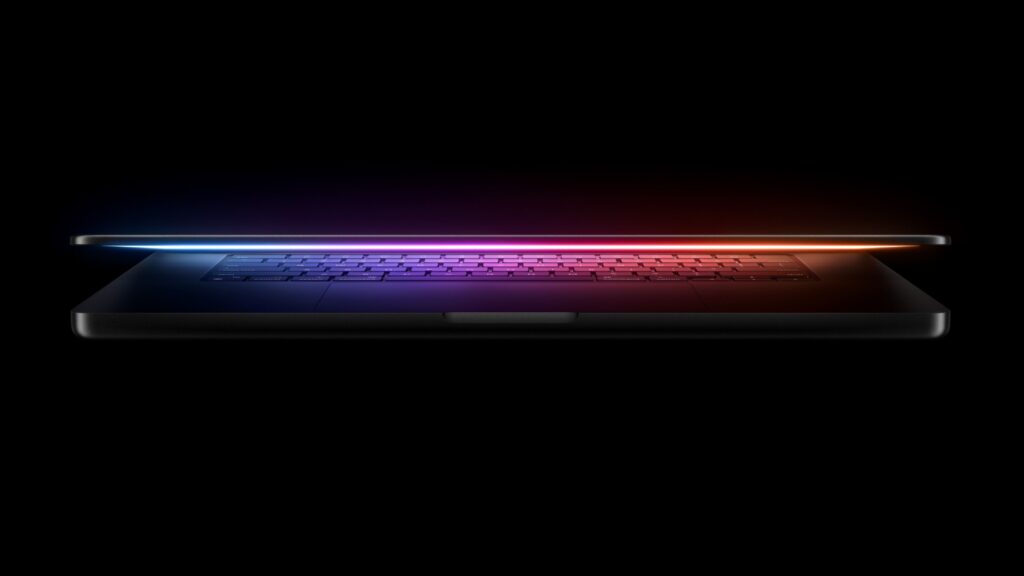
Apple refreshed the 14- and 16-inch MacBook Pros with the M5 Pro and M5 Max models in March 2026, but depending on your needs and interests, you may want to skip this generation because there’s something better in the works.
The M5 Pro and M5 Max MacBook Pro models have faster chips, but the same design that Apple has been using since 2021. An updated design with new display technology and faster performance will arrive in late 2026 or early 2027.
OLED touch screen
The next MacBook Pro to be released will be the first with an OLED screen, according to rumors. iPhones have used OLED for years, and Apple launched a larger-screen OLED device with the M4 iPad Pro in 2024.
OLED has advantages over the mini-LED display on current MacBook Pro models. Pixels can be illuminated individually for deeper blacks, more vibrant colors, and no blooming of surrounding pixels. Energy savings can be achieved compared to mini-LED displays, response times are faster and viewing angles are better. The brightness of OLEDs can be an issue compared to LEDs, but as OLED technology has improved, so has the brightness. The combination of true black and vibrant colors is ideal for HDR content.
With OLED, the next MacBook Pro is expected to have touchscreen capabilities.
Apple has repeatedly said that the Mac will not have a touchscreen, but Apple’s position has changed. Several rumors suggest that touch capabilities are coming, making the Mac more like an iPad. Touch controls will be available alongside traditional mouse and keyboard input options.
Design Update
Some rumors suggest that the OLED MacBook Pro will be thinner, and since Apple hasn’t updated the MacBook Pro design since 2021 and this is a major technological change, some sort of design refresh is likely. The sizes will remain the same and Apple will not remove the keyboard or trackpad.
Instead of a notch, the MacBook Pro OLED should have a Dynamic Island which takes up less space on the screen. The dynamic island will be interactive and expand contextually based on the Mac app or feature being used.
2nm chip
The OLED MacBook Pro models will be the first to use Apple’s 2-nanometer chip technology that is rumored to be integrated into the M6 series chips.
The change in node size is expected to result in faster speeds with lower power consumption and higher transistor density. Performance per watt will improve and 2nm chips will use GAA nanosheet transistors instead of FinFET. TSMC claims that the new transistor technology will bring improved performance and reduced power consumption.
Cellular connectivity
There have been rumors that 5G could come to Macs, and if that’s Apple’s plan, it would make perfect sense to offer it in the OLED MacBook Pro.
Ultra-branding
OLED touchscreens will be limited to the high-end 14- and 16-inch MacBook Pro models due to cost, and Apple may even use the new “Ultra” branding.
It’s possible that the M6 OLED model will be sold alongside the existing M5, M5 Pro, and M5 Max models rather than replacing them, and if that’s the case, we’re likely looking at a significant price increase. Apple could also refresh the entire lineup with M6 chip variants, reserving the OLED display for the more expensive models.
If you don’t care for OLED display technology or a touchscreen and want something cheaper, you probably won’t want to delay your purchase.
First generation technology
Some first-generation Apple Macs may experience more problems than expected, which was the case during the 2016 transition to the butterfly keyboard.
If you don’t want AppleCare+ and are concerned about first-gen issues, the M5 Pro and M5 Max MacBook Pro models are a safer bet.
Launch date
The OLED MacBook Pro could arrive as early as late 2026, but it instead looks like Apple will hold onto it until early 2027. Apple is facing chip shortages that will force it to hold onto the MacBook Pro longer to build up inventory.
