
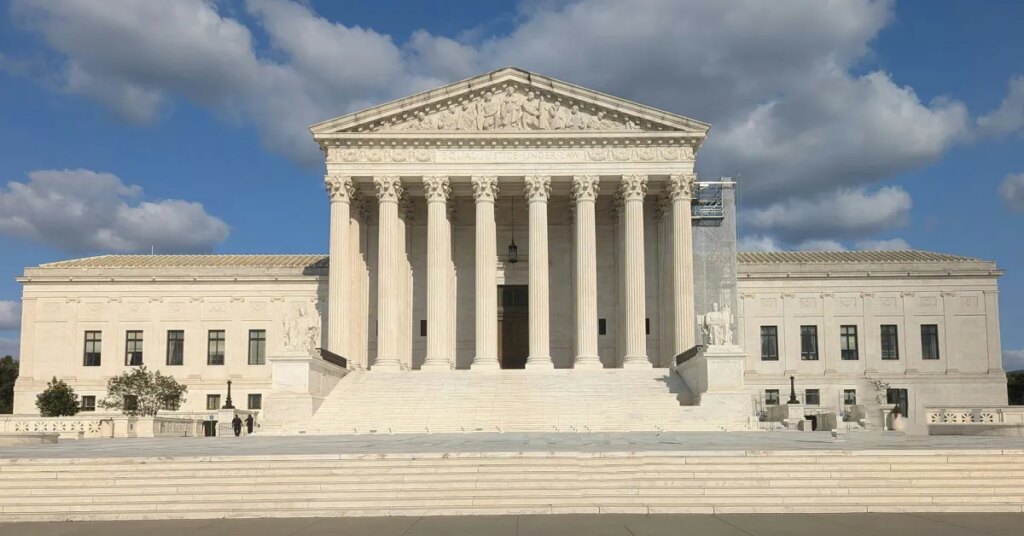
The U.S. Supreme Court is hearing arguments on the legality of geofence warrants, sometimes also called “digital dragnets” because they capture the location data of large numbers of innocent citizens in addition to criminal suspects.
In a practice that raises obvious privacy concerns, law enforcement is increasingly asking tech giants to identify all smartphone users present in a particular location at the time a crime was committed…
CNET explains how geofence mandates work.
If there are no clear suspects for a crime, law enforcement may issue a warrant to a tech giant requesting location data. The police draw a circle on a map around a crime scene and specify a time window. The technology company (most commonly Google) searches its database for devices within this “fence” during this period. The police may then ask the company for specific account details, such as email addresses, phone numbers and usernames.
The arguments for and against
While the police are supposed to have good reason to suspect those whose details they request, in practice this may boil down to simply being at the scene during the period in which a crime was committed. In one example of a bank robbery, those considered present at the scene included people sitting in a church near the bank.
The Justice Department argues that smartphone location data should not be classified as “sensitive data” since it represents public movements that others could observe. Additionally, DOJ lawyers say everyone is free to turn off location services.
Privacy advocates argue that being able to spot someone you know in a location is very different from obtaining the identities of hundreds or even thousands of strangers, and that smartphone users may rely on the location services of Google Maps or Apple Maps to reach their destination. Lawyers opposed to geofence warrants argue that they violate Fourth Amendment protections against illegal searches.
What happens next?
There are three possibilities, two of which would amount to essentially the same thing.
First, the Supreme Court could rule that geofence warrants do indeed violate the Fourth Amendment and are therefore illegal, at least in their current form.
Second, he might decide that they are legal.
Third, and perhaps the most likely outcome, the court could simply refuse to rule. This would effectively mean that the practice can continue, and would therefore be tantamount to declaring them legal – although the latter outcome would at least leave room for new arguments on the same issue at a later date.
What is your view on the matter? Please share your thoughts in the comments.
Photo by Dave Vaill on Unsplash

FTC: We use automatic, revenue-generating affiliate links. More.
