OpenAI Introduces GPT-Live to Make ChatGPT Voice Feel Like a Real Conversation
OpenAI today introduced GPT-Live, which it describes as a new generation of voice models intended to make speaking to AI seem more like talking to a real person. GPT-Live is intended to replace the existing ChatGPT voice experience.
GPT-Live is able to listen and speak at the same time, and it can show that it is paying attention with recognition phrases such as “mhmm.” The model was designed for continuous interaction and it can make decisions about whether to speak, continue listening, pause, interrupt, or use a tool several times per second.
Talking with ChatGPT should now feel more like a real conversation. You can interrupt with a question, pause to collect your thoughts, or ask ChatGPT to slow down. He naturally recognizes what you say with expressions like “mhmm” or “understood,” so you know he’s following along. We’ve also remastered ChatGPT’s nine distinct voices for GPT-Live.
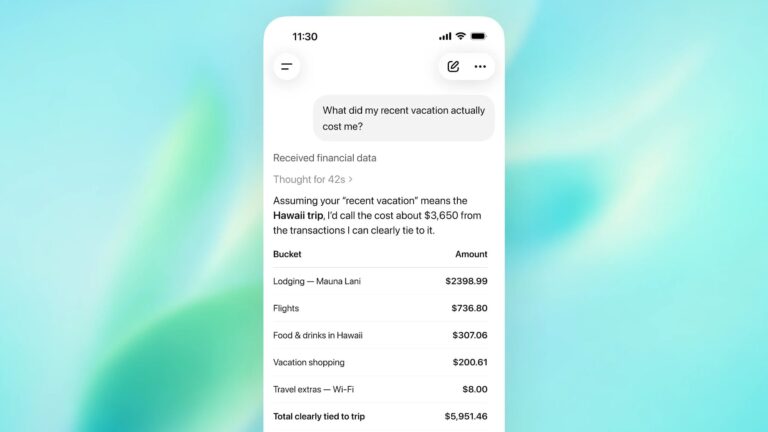
OpenAI claims that GPT-Live is its most intelligent speech model yet, using the latest frontier model (currently GPT-5.5) for web search, deep reasoning and complex work. While GPT-Live is working on a task, it is able to continue a conversation and then report the results of a task once it is completed. It also works for live translation and displays rich visual maps for weather, stocks, sports, and more.
OpenAI is rolling out GPT-Live-1 and GPT-Live-1 mini to ChatGPT users worldwide today. GPT-Live-1 is the default for Go, Plus, and Pro users, while GPT-Live-1 mini is the default for free users.
ChatGPT users can press the Voice button to speak with ChatGPT and experience GPT-Live. GPT-Live does not yet support voice with video or screen sharing in ChatGPT, but OpenAI is working to add this feature soon.