
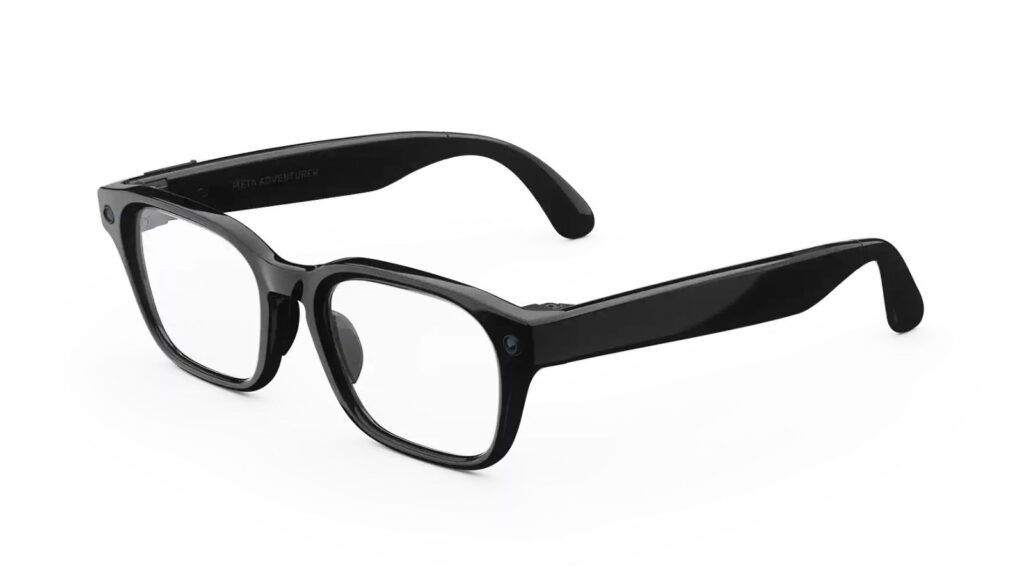
Meta today unveiled its first smart glasses sold under its own brand rather than Ray-Ban or Oakley, undercutting the price of its existing line as it strives to expand its lead in the category before Apple enters the market.
The new Adventurer and Fury models are priced at $299, which is $80 less than the second-generation Ray-Ban Meta Wayfarer launched last year. A third model, the Starfire, was designed in collaboration with Kylie Jenner and costs $399.
EssilorLuxottica, the parent company of Ray-Ban and Oakley, manufactures the glasses although Meta designs them in-house and puts its own name on them, with the EssilorLuxottica logo appearing on the temples and packaging alongside that of Meta.
The Adventurer has a rectangular Wayfarer-like shape, available in standard and large sizes, while the Fury shares this silhouette but is thicker. The Starfire takes a slimmer oval shape and includes a small gemstone on the right lens near the camera, a metal nose pad designed to resist makeup residue, and the ability to set an AI-generated version of Jenner’s voice for Assistant and onboarding prompts. The Starfire’s case includes a handwritten note from Jenner and a built-in mirror.
In all three styles, Meta added a three-way adjustable nose pad, adjustable temple tips, and overextension hinges so the arms flare slightly for larger head shapes. The companies offer 26 color and lens combinations between the Adventurer and Fury alone, including tortoise, black and green finishes, as well as transitional, polarized and clear lens options, and the glasses support prescription lenses with a power range of -12 to +2.25.
The new glasses feature the same 12-megapixel camera, 3K video capture, five-microphone array and eight-hour battery life as the existing Ray-Ban Meta Gen 2 glasses, with the included case adding about 40 hours of extra charge. Meta also offers a separate Meta glasses charging stand compatible with new models as well as the Ray-Ban Meta and Oakley Meta HSTN lines.
The glasses come with Meta’s Muse Spark AI model, which the company says improves response quality and adds 14 new languages to live translation support, including Mandarin, Korean, Japanese, Arabic and Hindi, bringing the total to 20. A new ‘Dynamic Photo’ feature captures a burst of images and selects the best photo, and turn-by-turn navigation for pedestrians is coming to the range equipped with cameras after its debut on Meta Display Glasses.
According to BloombergMeta also hinted that it is considering a camera-less version of its glasses, focusing on an audio-only experience for phone calls, media playback and interacting with its AI tools. A camera-less option could both lower the price and enable new styles, he said, given the need to include fewer components.
The company also spoke directly to Apple, calling the iPhone maker “terrific” as it approaches its own eyewear debut. “I think you have to take everything they do seriously,” said Meta’s Alex Himel, adding, “they’re good at hardware, they’re good at design. There are a number of places where we’re not necessarily going to be able to create the same great customer experience when paired with the phone, and so I think they’re taking advantage of that.”
Apple is widely expected to launch its first smart glasses in 2027, designed in-house rather than through a partner brand. Apple’s glasses will likely rely on a camera, microphones, and Siri for AI-based functionality without a built-in display, putting them in direct competition with Meta’s camera-equipped lineup rather than high-end display models like Meta’s Ray-Ban Display glasses.
Meta said it has explored facial recognition tools to identify people the wearer knows, but has not put the feature into active development despite operating amid privacy and societal concerns.
Adventurer, Fury and Starfire glasses are available starting today from retail partners Meta and EssilorLuxottica, including LensCrafters.
