
Whenever you try to engage with the Linux community as a newcomer, you will hear a multitude of opinions about what you should install, what is best as a beginner, etc. These days, discussions tend to revolve around options like Ubuntu or Fedora, and maybe even Arch if you talk to certain groups.
But another popular, if somewhat understated, option is Linux Mint. This Linux distribution is often aimed at those who want to play it safe and be a little more conservative with their PC – keeping a familiar experience that works without doing anything too crazy. It’s not cutting edge development, but after spending some time with it, I’d say it’s still a great, safe and effective option.
Get your bearings right away
Mint guides you to all the essentials
As great as many Linux distributions are, it’s very easy to feel lost when you first get started. Of course, many basic desktop paradigms are understandable enough to us just by looking at the screen, but for someone moving from Windows and perhaps not very tech-savvy, even a small obstacle can become an unnecessary headache.
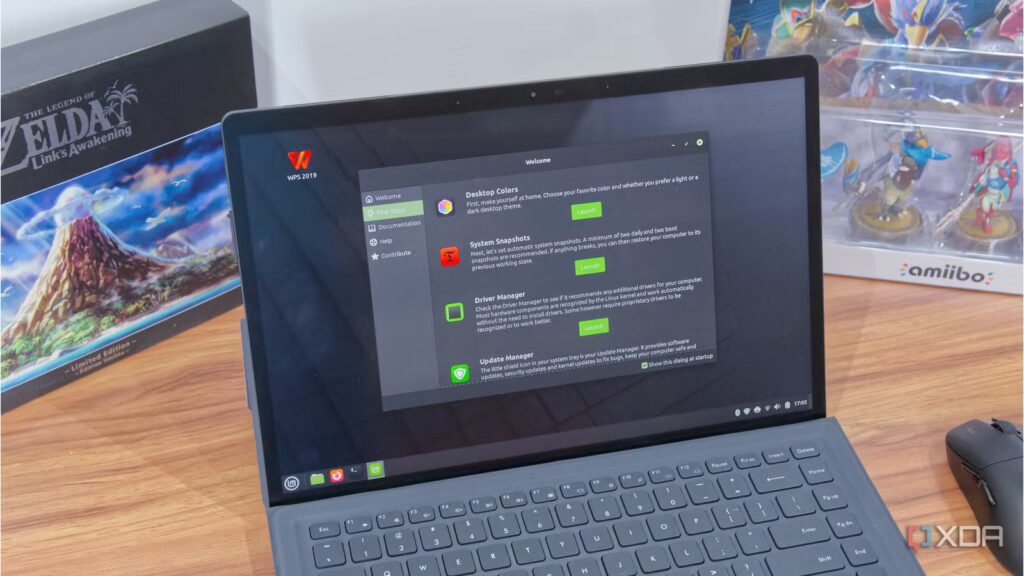
The first time you start Linux Mint, it immediately welcomes you into the operating system with an overview of all the essentials. You can access personalization, check for updates, manage drivers and access system settings. All of these things are optional, but they are all presented and explained to you so you know where to start if you want.
This means that, right from the start, you can customize Linux Mint to look and behave the way you want, make sure all applications are up to date and have the latest features, and even set up system snapshots for recovery, just in case. You can ignore any of these things, but you have no excuse for surprises later; you organize things the way you want from the start.
New to Linux? Here are 7 of the best beginner-friendly distros to try
Get up and running with Linux in no time.
Exactly what you expect
Windows users are welcome

Linux Mint is also great for Windows converts, as it comes with familiar desktop paradigms that aren’t overwhelming like others can be. The latest versions of GNOME are far too different from the traditional Windows experience, which can make them alienating and confusing at every turn. When the foundations are so different, things are going to seem harder than they really are.
You can say the same for others like COSMIC, but even KDE Plasma, which is already more Windows-like, has some quirks. Accidentally drag your mouse to the upper left corner and you’re transported to the Workspaces view, which isn’t something you can accidentally trigger in Windows.
Linux Mint keeps things simple and very similar to Windows in this regard. You have a taskbar with an application launcher, pinned applications, and system tray icons, which mostly resemble Windows. Even the application launcher itself has a certain degree of familiarity, especially compared to older versions of the Windows Start menu.
Ubuntu is the reason why Windows users don’t want to switch to Linux
First impressions count
A solid foundation
Slow and steady he wins the race

Another reason to go with Mint: it’s built on a solid foundation and includes everything you need for a system that basically works. It comes with a slightly older kernel than some other Linux distributions, but that means it’s generally a tried-and-true kernel that has had plenty of time to refine and be extremely stable. Updates as a whole are taking a little longer to come out, but they’re still solid.
To be honest, this may have some drawbacks if you install it on the newer hardware. I had issues with some drivers not working because I was using a computer too new for the included kernel version, but for the majority of PCs this isn’t really a problem, and the stability you get in exchange for slower updates can’t be underestimated. Additionally, there are often optional kernel updates if you need updated drivers for certain hardware.
Apps work
Well, for the most part
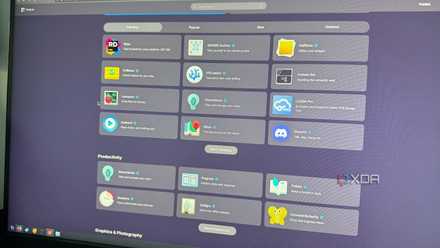
Finally, Linux also wins because it has everything you need to get just about any application you want without much hassle. For native system packages, you have access to the same repositories as Ubuntu, and since it’s still one of the most popular options, this means you have a very large application repository from the start. And if you’re not sure what that means, don’t worry: these apps are only available through the included software manager, so it’s just like a typical app store. The Software Manager also automatically serves packages from Flathub, which means that yes, Flatpak support is included by default and you have access to the main source of Flatpak applications.
Additionally, if you download applications using a web browser, DEB packages are also supported (as with any Debian-based distribution) and AppImage files also work out of the box. The only downside here is that you have to manually allow AppImage files to run as executables; Mint still doesn’t automatically prompt you to do this.
5 Reasons Why Linux Beginners Should Use Flatpak
Managing applications on Linux can be confusing for new users, and Flatpak makes it simple.
All of this is a roundabout way of saying that if an app supports Linux, there’s a good chance you’ll easily find a version that works specifically on Mint. With all the sources and formats it supports, Mint is well covered, so there should be no unexpected gaps.
Mint is the safe option, and that’s a good thing
Ultimately, everyone approaches their computer in a different way, but for many of us, the safe option is the best option, and Linux Mint fills that role perfectly. It’s exactly what you want from a computer, and it all works, while still being lightweight and performing well on older or underpowered hardware. While it’s not necessarily my personal choice as someone familiar with Linux, it’s very easy to recommend to a newcomer.
