
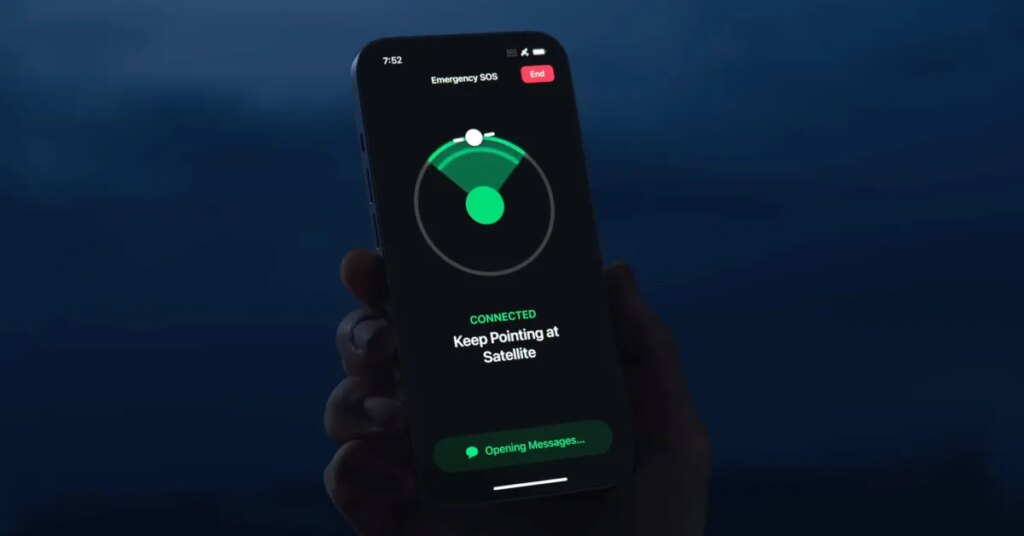
Nearly three in four satellite-enabled smartphones shipped in 2025 were iPhones, according to a new report from Counterpoint Research. Here’s where the market is expected to move next.
Shipments expected to reach 46% by 2030
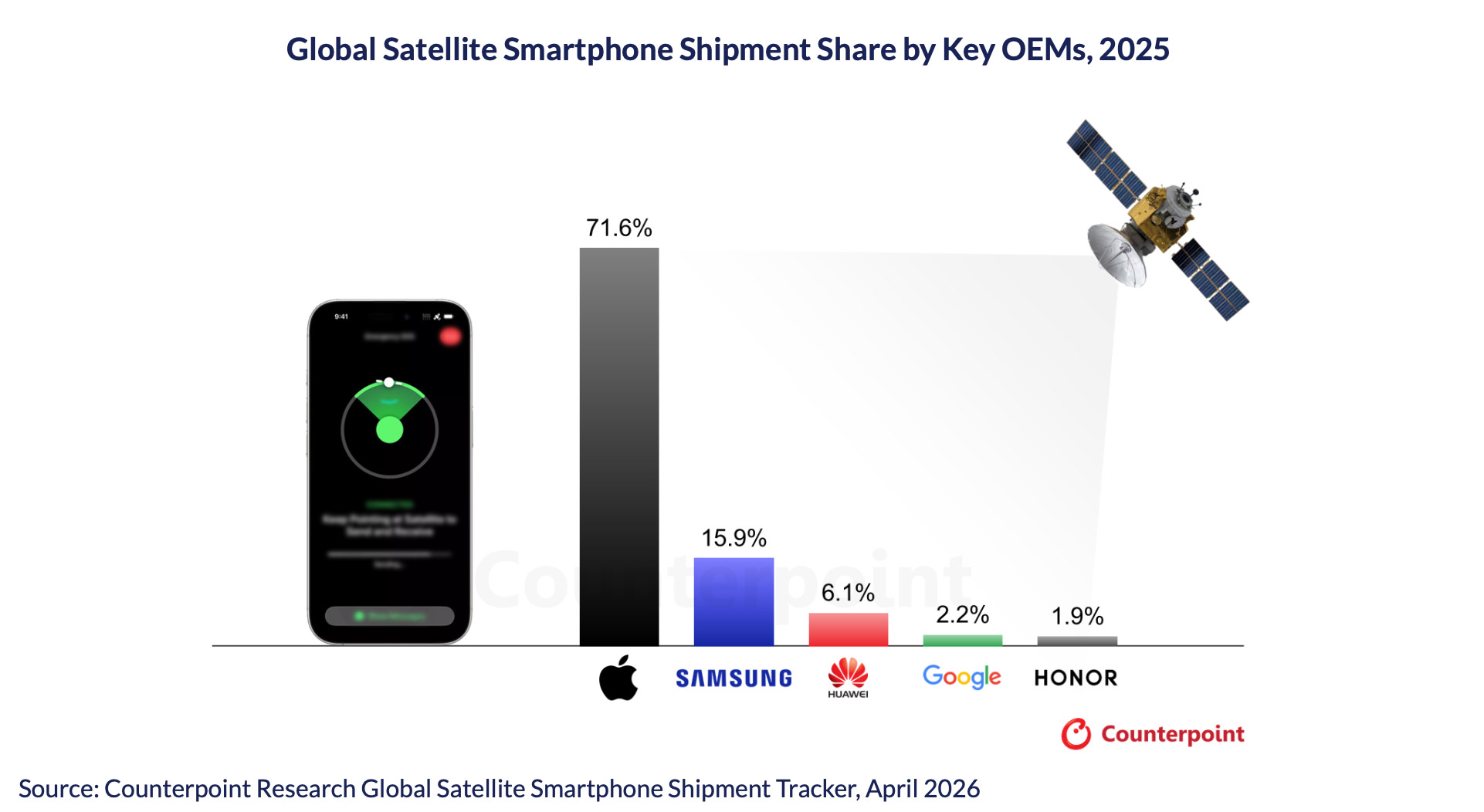
According to a new report from Counterpoint Research released today, Apple shipped 71.6% of all satellite-enabled smartphones last year, followed by Samsung at 15.9%, Huawei at 6.1%, Google at 2.2% and Honor at 1.9%.
Counterpoint says the market is currently split, with companies like Apple, Huawei and Google using proprietary satellite systems, while much of the Android ecosystem, including Samsung, Xiaomi, OPPO, HONOR and vivo, is aligning with new 3GPP non-terrestrial network (NTN) standards.
He adds that the former enables tightly integrated, device-specific services today, while the latter aims to turn satellites into extensions of cellular networks for broader interoperability and scale in the future.
The report also notes that even though Apple has taken the lead, market-wide adoption still depends on broader use cases beyond messaging and emergency services, in addition to an expansion into mid-range devices:
The satellite smartphone market is mainly driven by the premium segment, but the lack of exceptional use cases limits mass adoption. Use cases based on 3GPP Release 17 are limited to SOS and messaging. While 3GPP version 18 will contribute to further adoption by brands in the premium segment, mass adoption in the mid-price segment is only expected with version 19.
Another aspect that influences adoption rates is how satellite connectivity is implemented at the chipset level. Meet lead analyst Shivani Parashar:
Qualcomm has been at the forefront among Android chipset players in enabling satellite connectivity through its Snapdragon X80 and X85 modems, followed by Huawei, Google and Samsung. MediaTek is also advancing NTN integration with its MT6825 5G SoC. Increased participation from chipset players will increase competition while potentially helping with scalability.
Finally, the report discusses partnerships between telecom operators and satellite providers, and how these are already helping to enable rapid adoption.
He cites efforts such as T-Mobile and Rogers’ partnership with SpaceX, AT&T’s partnership with AST Mobile, and Apple’s partnership with Globalstar, now owned by Amazon, positioning North America as an early leader in this market.
It also notes that while “telecom operators in other regions, such as Europe and China, are not rushing to offer satellite connectivity, satellite operators are increasing their capacity to meet mass market needs.”
Against this backdrop, Counterpoint expects global shipments of smartphones with satellite connectivity to reach 46% by 2030, with “Apple, Google and Samsung (leading) in overall penetration” and “more Android players and telcos beyond developed markets (playing) a key role in accelerating global adoption,” according to VP of Research Peter Richardson.
To read the full report from Counterpoint Research, follow this link.
To discover on Amazon

FTC: We use automatic, revenue-generating affiliate links. More.
