
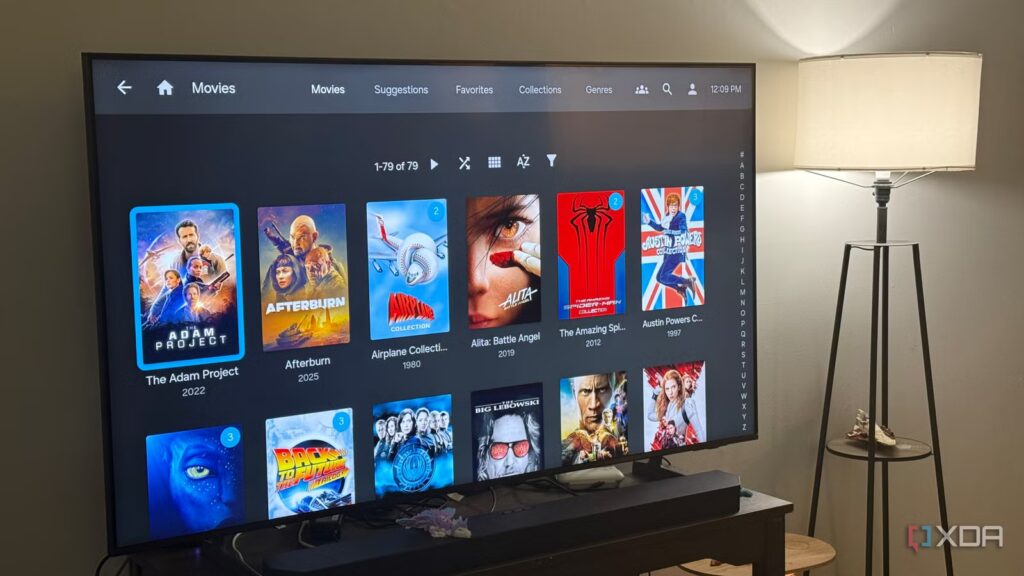
Smart TVs have become ridiculously good in some ways, but strangely outdated in others.
They can run refined streaming applications, upscale low-resolution content, sync with smart home platforms, and process HDR formats that previously required dedicated hardware. Then you turn the TV over, look at the Ethernet port, and realize it’s still often stuck at 100 Mbps. This seems increasingly out of place on devices that are supposed to be the center of a modern entertainment setup.
This is especially frustrating because wired networking should be the boring, reliable option. If I plug a TV into Ethernet, I don’t do it out of nostalgia or because I like cable management. I do this because I want stable performance, fewer wireless dropouts, and one less device cluttering up my Wi-Fi network. A slow Ethernet port doesn’t make the TV unusable, but it makes the “wired is better” advice seem incomplete.
I ran my home server on Wi-Fi for a year and learned when Ethernet really matters
Wired connections may be the “best,” but sometimes just enough is enough
Smart TVs have overtaken cheap wired networks
Streaming quality continues to increase faster than TV ports

The obvious defense is that 100 Mbps Ethernet is sufficient for most streaming services. This is technically true, and it’s why manufacturers continue to get away with it. Netflix, Disney+, Max, and other major services generally compress video enough that even high-quality 4K streams fit comfortably under that cap. For the average viewer, the port probably won’t be the first thing that poses a problem.
The problem is that smart TVs are no longer just Netflix boxes with panels attached.
Many people use them with local media servers, network attached storage, Plex, Jellyfin, or high-speed video files ripped from their own drives. In these cases, 100 Mbps stops seeming generous and starts seeming restrictive. Full-quality 4K Blu-ray ripping can go way beyond what this port can comfortably handle.
This is where the lag gets annoying. The TV may have a great panel, good HDR support, and great picture processing, but the wired connection may be the weakest link in the chain. It’s not because Ethernet is bad. This is because the specific Ethernet port is unnecessarily underpowered. When a high-end TV comes with networking that seems cheaper than a basic USB adapter, something has gone wrong.
Wi-Fi shouldn’t be the best connection by default
Wireless speed gains don’t excuse weak wired ports
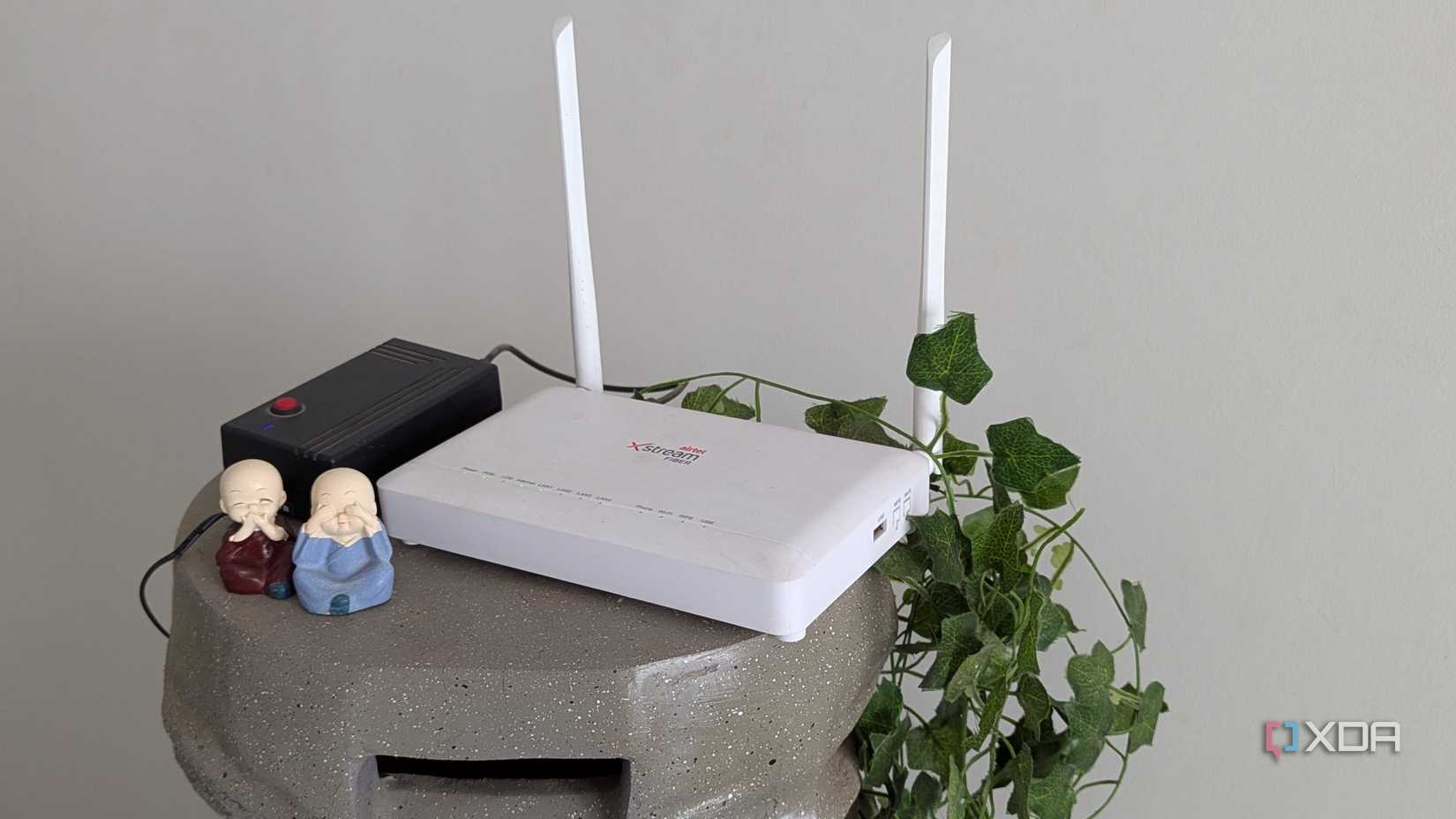
Modern Wi-Fi has improved a lot and I won’t pretend otherwise. A good Wi-Fi 6 or Wi-Fi 6E setup can easily outperform a 100 Mbps Ethernet port under the right conditions. Many TVs will experience faster real-world throughput via wireless than with cable plugged into the back. This is a strange place to land, since wired networks are supposed to be the reliable fallback.
The problem is that Wi-Fi performance depends on everything around it. Router locations, wall materials, interference, neighboring networks, distance, and household congestion are all important. A TV in the same room as a router may be perfectly happy with Wi-Fi, while another TV in a bedroom may struggle every night. Wired Ethernet is designed to remove some of these variables rather than introduce a new bottleneck.
This is even more important in homes where streaming is not the only network-intensive activity. Game downloads, cloud saves, video calls, smart cameras, tablets, laptops and phones all compete for wireless airtime. Moving a TV to Ethernet should help alleviate this pressure. When the wired port is capped at 100 Mbps, it still helps with stability, but it doesn’t seem like the complete solution it should be.
Manufacturers can claim that most people will never notice it
The cost-cutting argument isn’t entirely unreasonable here
There is a fair counterpoint here, even if I don’t like it. Most people don’t stream giant local 4K files from a home server. They open an in-app app, watch compressed videos from a major service, and call it a night. From this point of view, 100 Mbps Ethernet seems sufficient for most buyers.
Manufacturers also have to make choices that scale to millions of units. A faster Ethernet controller, different board layout, additional testing and support considerations all increase costs somewhere. It may only be a small amount per TV, but it’s significant when companies are building entire product lines on tight margins. If the average customer never asks about Ethernet speed, the incentive to improve it remains low.
There’s also the unfortunate reality that many buyers never use Ethernet at all. Many TVs connect directly to Wi-Fi during setup and stay there for their entire lifespan. Retail boxes rarely emphasize Ethernet speed because they don’t sell TVs the way brightness, refresh rate, HDMI ports, or gaming features do. From a business perspective, Ethernet slowness is easy to overlook because it rarely comes up in showroom conversations.
Slow Ethernet still sends the wrong message on premium TVs
Small share creates greater ownership frustration

This counterpoint makes sense, but it doesn’t make the decision pleasant. A TV doesn’t need to serve only the least demanding use case, especially when high-end models are marketed as central entertainment devices. If a manufacturer is already selling advanced gaming features, high refresh rates, Dolby Vision, powerful processors, and smart home integration, the wired network port shouldn’t be considered an afterthought. Gigabit Ethernet should be a normal expectation on mid-range and high-end TVs.
A slow Ethernet port won’t get faster just because you plug in a better cable, so check your TV’s network specs first. If the TV only has a 100 Mbps Ethernet port, any decent Cat5e or Cat6 cable should suffice, and replacing it probably won’t solve the buffering caused by the port itself.
If you’re using a USB Ethernet adapter, streaming box, gaming console, or other device with Gigabit Ethernet, Cat5e is still suitable for most home runs, while Cat6 gives you more headroom for longer cables and cleaner cable management. I would avoid mystery cables with no printed rating, damaged clips, or oddly thin construction, because the cheapest cable in the drawer can turn troubleshooting into a haunted attic with LEDs.
It is also a question of lifespan. People often keep their TV much longer than their phone, tablet or streaming stick. A television purchased today may still be hanging on the wall in seven or eight years, or even longer if the panel holds up. Shipping it with a 100 Mbps port means it starts with less headroom than it should have.
There is also a user experience angle. When something is buffered over Ethernet, most people don’t immediately think about port speed. They blame the application, the server, the router, the file or the TV itself. This makes troubleshooting more annoying than it should be, because the datasheet hides a very ordinary limitation in a place that many people never think to check.
A better network should be part of better TVs
TV makers don’t need to turn every living room display into a network workstation. No one is asking for enterprise features, managed switching, or anything that would complicate setup. A simple Gigabit Ethernet port would be enough to make the wired network truly modern. This would give local streaming setups more wiggle room, help enthusiasts avoid unnecessary workarounds, and make high-end TVs feel more feature-rich.
The most frustrating thing is that this is not a futuristic request. This is a fundamental expectation for devices that increasingly rely on network performance. Smart TVs have gone far beyond simple streaming boxes, but too many people still view Ethernet as one leftover checkbox. If the wired network is going to stay on the back of the TV, it needs to be fast enough to merit the space.
