“MacBook Ultra” coming soon with touchscreen and 5 other changes
Reports and rumors suggest that the next high-end MacBook Pro that Apple will launch might not be a MacBook Pro at all. It could actually be something entirely new and more exciting – a “MacBook Ultra” – marketed as the company’s top-tier laptop offering. The device will likely sit above the current MacBook Pro M5 Pro and M5 Max, rather than replacing them, suggesting they will remain on sale.
One thing to say up front is that Apple should stick with the existing M5 Pro and M5 Max chips for its ‘Ultra’ touchscreen model. Apple reportedly plans to abandon what would have been the “M6 Pro” and “M6 Max” for more powerful “M7 Pro” and “M7 Max” chips. A new entry-level MacBook Pro featuring the M6 chip is still expected to launch later this year, while the second-generation MacBook Ultra will adopt the M7 chip architecture when it arrives later in 2027.
In his latest report, BloombergMark Gurman’s Mark Gurman doesn’t specify a release date for the first MacBook Ultra models, but the wording of his summary of the next Macs implies that it could still arrive between October and December of this year, barring delays due to the global memory chip shortage.
Below, we’ve listed the features and changes we expect for the MacBook Ultra.
OLED screen
BloombergMark Gurman and analyst Ming-Chi Kuo claim that Apple is preparing OLED technology for these models, and industry reports support their claims. Samsung Display would manufacture the panels exclusively and the supplier has invested heavily in an 8.6 generation OLED production line in South Korea. The line reached a key milestone for mass production in May.
OLED features an overall upgrade over current mini-LED display technology, bringing deeper colors and higher contrast ratio with true blacks. In an OLED display, individual pixels turn off instead of dimming when not activated, reducing light leaks and improving energy efficiency. OLED displays also tend to have better HDR output than mini-LEDs, but they don’t always match the brightness levels of mini-LEDs.
Touch screen
The new MacBook Pro is expected to become the first Mac to support touch input directly on the screen. This is a notable change from Apple’s long-standing stance against introducing touchscreen functionality to the Mac.
Apple previously experimented with touch controls via the OLED Touch Bar on previous MacBook Pro models, but the feature was ultimately abandoned following lukewarm reception. Rather than positioning the MacBook Pro as a touch-enabled device like the iPad, Apple reportedly intends to allow users to seamlessly switch between touch and traditional trackpad or mouse input throughout the system.
Some features of macOS Golden Gate hint at a future touchscreen Mac. Apple added direct touch input to Sidecar so users can tap and interact with macOS elements when using the iPad as a Mac display. macOS Golden Gate also supports an iPhone-style pull-to-refresh option and can be used in apps like Safari, Mail, News, Podcasts, and Calendar. A pull-to-refresh option makes the most sense on a touchscreen.
Reinforced hinge
Apple has reportedly developed a reinforced hinge and screen hardware to prevent the screen from bouncing or moving when touched. Apple is apparently aware of the same problem affecting existing touchscreen PCs.
Slimmer design
Gurman reported that Apple is working to make the MacBook Pro OLED significantly thinner, as part of the company’s plan to create “the thinnest and lightest products in their class in the entire technology industry.” (Think of the latest iPad Pro and iPad Air – two of the thinnest devices the company has ever made.) Indeed, the reporter said there’s a good chance the next MacBook Pro model will represent a “real overhaul” for the laptop, thanks to the combination of the OLED display and a slimmer design.
Notably, the MacBook Pro became thicker and heavier with its most recent redesign in 2021. A major highlight was the reintroduction of several ports that had been removed in previous iterations in favor of making the chassis thinner. The big question is how Apple will make its redesigned MacBook Pro thinner without removing features it reintroduced fairly recently.
Dynamic Island
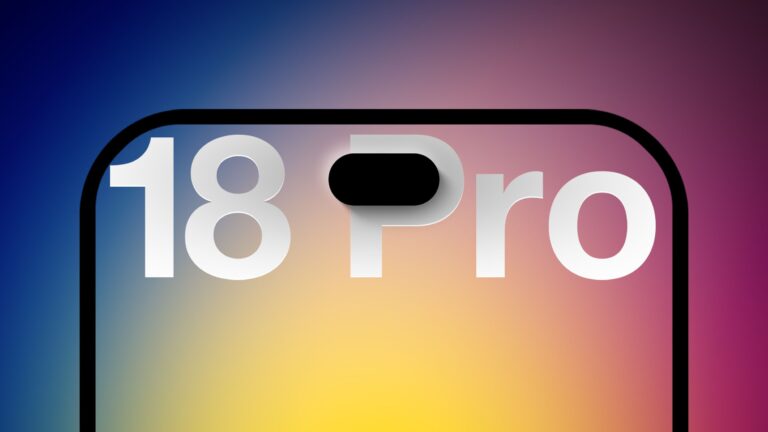
The MacBook Ultra could ditch the current notch used in MacBook Pro models for a screen cutout potentially similar to the iPhone’s Dynamic Island, according to Bloomberg. Such a move would reflect the evolution of Apple’s iPhone, as the iPhone notch became the current Dynamic Island starting with the iPhone 14 Pro models in 2022.
As with the iPhone, the Dynamic Island Mac will be interactive and expand contextually based on the Mac app or feature being used. The change should address long-standing user complaints about the notch, which physically penetrates the menu bar in macOS.
Price changes
There is no doubt that Apple will unveil the MacBook Ultra as an ultra-premium product priced higher than the current 14-inch and 16-inch MacBook Pro models. Apple raised prices on all of its Macs in June 2026 – the price of the MacBook Pro increased by $300 – so the MacBook Ultra will likely be even more expensive than expected.
For what it’s worth, the high-end 14-inch MacBook Pro with M5 Pro chip starts at $2,499 after the price increase, while the 16-inch MacBook Pro M5 Pro starts at $2,999.