
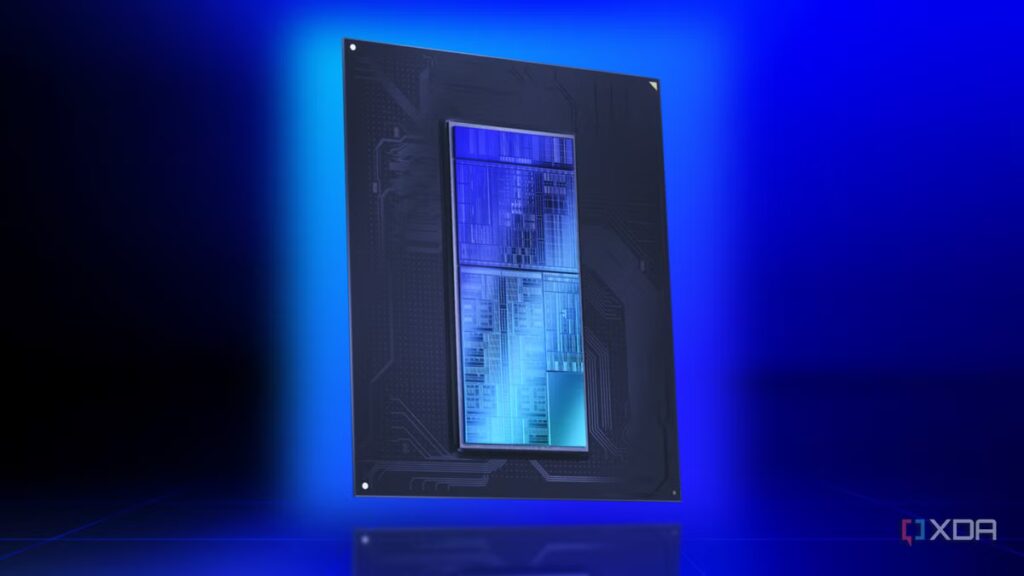
I’m not one to ice Intel processors when they’ve been mired in controversy and mediocre generational improvements over the past couple of years. Many Raptor Lake processor owners suffered lasting damage to their chips due to a power surge bug, seriously damaging confidence in the company’s products. Then Arrow Lake processors disappointed everyone with poor gaming performance and stability issues. So you’d be forgiven for ignoring Intel’s next-generation Nova Lake processors, but it’s not hyperbole when I say these chips are poised to break new ground for Chipzilla. Nova Lake not only brings a record number of cores, but also adopts cutting-edge transistor and power delivery technologies. Additionally, it aims to compete with the Ryzen 3D V-Cache which has given AMD its long-standing advantage in gaming. And it also plans to launch a new era of more durable Intel sockets, rivaling AMD in its own game.
Intel’s next generation of processors could finally catch up with AMD on something that really matters
Upcoming Nova Lake processors expected to launch on long-lasting LGA 1954 socket
Nova Lake flagship will feature 52 cores
Including a record 16 performance cores
The rumored 52-core Nova Lake chip isn’t exactly news, but now we have even more details about Intel’s next desktop flagship, making the record-breaking processor seem more real. The Core Ultra DX9 400, as it will likely be called, will feature 16 P cores, 32 E cores, and 4 LPE cores (low power E cores), with a dual-chip layout similar to Ryzen’s CCD design. The 52-core configuration includes 16 performance cores, something we’ve never seen on any Intel processor before. The Raptor Lake and Arrow Lake flagships, namely the Core i9-14900KS and Core Ultra 9 285K, each had 8 P cores. Doubling this figure on the Nova Lake flagship could indicate a massive performance improvement over its predecessors. Previous reports predicted that Nova Lake would deliver approximately 10% more single-threaded performance and 60% more multi-threaded performance than Arrow Lake. Although the dual-chip, 52-core variant is expected to be aimed at HEDT users, other SKUs with 44 and 28 cores in total will be aimed at regular consumers.
What we also know is that Nova Lake is built on TSMC’s N2 node, a 2nm process that is two full generations newer than TSMC N4, the one used on AMD’s Zen 5 processors. TSMC N2 also incorporates GAAFET technology, replacing the existing FinFET process to promise higher performance per watt and increased power efficiency. Additionally, Backside Power Delivery (BPD) technology in TSMC’s N2 node will decouple power and signal wiring, enabling higher frequencies, better efficiency and greater transistor density. Intel’s 18A process also includes these two next-generation technologies, but not all Nova Lake SKUs will use Intel’s internal node – Intel could reserve it for smaller models. AMD’s Zen 6 chips will also likely use TSMC’s 2nm node, so competition will be tight for Intel’s Nova Lake.

Next-gen processors finally use GAAFET and BPD, and I couldn’t be more excited
Next-generation semiconductors promise big changes
We’ll finally see Intel’s response to AMD’s Ryzen 3D V-Cache
Now we are talking
Intel appears to be taking a big turn with Nova Lake, as new leaks indicate we might finally see an answer to the Ryzen 3D V-Cache. Leaker HXL reports that Intel is working on a massive “bLLC” processor that packs tons of fast cache to improve gaming performance. This will be the first generation of Intel processors to feature a rival 3D V-Cache, something the industry has been waiting for for a long time. This rumored bLLC chip sports 288MB of cache that is part of the processor die itself, instead of being stacked on top of the cores like in AMD’s Ryzen X3D processors. The latest leaks show at least 12 Nova Lake SKUs, five of which are believed to ship with bLLC.
The fat-filled bLLC matrix is apparently significantly larger than the one we saw at Arrow Lake. While normal die size should be around 110mm2the double die model will measure approximately 150mm2. The additional bLLC on the flagship SKU is directly responsible for enlarging the chip size. Intel seems to be taking a huge gamble in terms of new microarchitecture, core configuration and L3 cache. Expectations are high from Nova Lake, given that Intel aims to improve its market position and distract consumers from its admittedly disappointing Arrow Lake series. Whether the bet wins or not will become clear in late 2026 or early 2027, when Nova Lake is expected to launch.


9/10
- Cores
-
8
- Topics
-
16
- Architecture
-
Zen5
The AMD Ryzen 7 9800X3D is the first AMD 9000 series processor with its 3D V-Cache technology, offering plenty of cache to store data on the chip rather than slower RAM. It’s an ideal choice for a high-end gaming PC with the latest and greatest technology from AMD, Intel, and Nvidia.
6 games that offer the best gains with AMD Ryzen X3D and 3D V-Cache processors
Get the most out of your X3D processor with these PC games.
Intel takes socket longevity seriously
Who would have thought it?
Intel never thought about sockets lasting a long time, to the point where users no longer expect them to change lanes. Yet that’s exactly what the company plans to do, starting with Nova Lake. In an interview with Club386, Robert Hallock, vice president and general manager of Intel’s Enthusiast channel, responded to a question about future Intel sockets supporting more processor generations with: “Yes. That’s it, I do.” Even before AMD’s AM4 socket redefined socket longevity, the company supported more generations of processors on older sockets than Intel. Now, Team Blue has publicly committed to bringing socket longevity to Intel after listening to feedback from enthusiasts. Robert Hallack was previously director of technical marketing at AMD, so it’s not entirely surprising to see these comments from him.
Supporting this sentiment, reports from Jaykihn claim that Intel’s next socket, LGA 1954, will support not only Nova Lake, but also its successor, Razor Lake. It is not yet known whether the LGA 1954 will extend to the Hammer Lake series, but Nova Lake and Razor Lake alone should make the socket last until 2030, thanks to the refresh of the range. With the exception of the Alder Lake and Raptor Lake series, Intel hasn’t really supported its sockets for over two generations of processors. Seeing the company change direction with Nova Lake is very promising, especially when seen in conjunction with competitor 3D V-Cache and the redesigned Nova Lake architecture.
8.5/10
- Cores
-
6
- Topics
-
12
- Architecture
-
Zen5
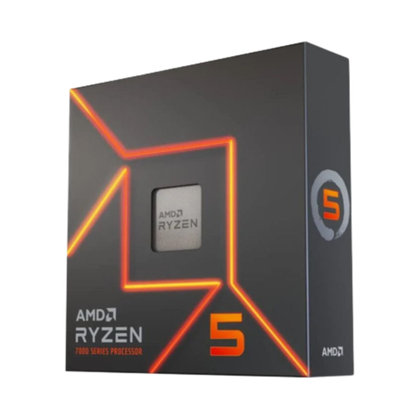
The 6-core AMD Ryzen 5 9600X is a powerful processor with an effective TDP of 65W. This Zen 5 processor has integrated graphics, DDR5 support, and a maximum boost of around 5.4GHz. It is ideal for systems where the greatest computing power is not required, such as gaming rigs and general PC builds.
Inside AMD’s strategy to make AM4 the longest supported socket in history
It’s not really the best of both worlds.
Nova Lake could be the turnaround Intel is looking for
Intel needs to bounce back in the desktop processor space, not only for its own sake, but also for the sake of consumers. Less competition is never ideal, and keeping AMD on its toes will benefit everyone. Intel is finally listening to consumer feedback and committing to socket longevity and gaming-focused performance with Nova Lake and LGA 1954. Whether these changes will play out exactly as Intel expects remains to be seen, but they are promising nonetheless.
