
Spotify is making two video podcast announcements today, including one related to Apple’s big video podcast improvement.
Spotify adopts Apple’s HLS technology to deliver video podcasts
Earlier this year, Apple unveiled a major upgrade to the video experience for Apple Podcasts. The company deployed its HTTP Live Streaming technology to improve the way Apple Podcasts video shows are delivered and consumed.
Apple shipped the enhanced experience for iPhone, iPad, Apple Vision Pro, and the web in late March. Hopefully, Apple’s OS 27 software updates will bring improved video podcasts to Mac and Apple TV next month.
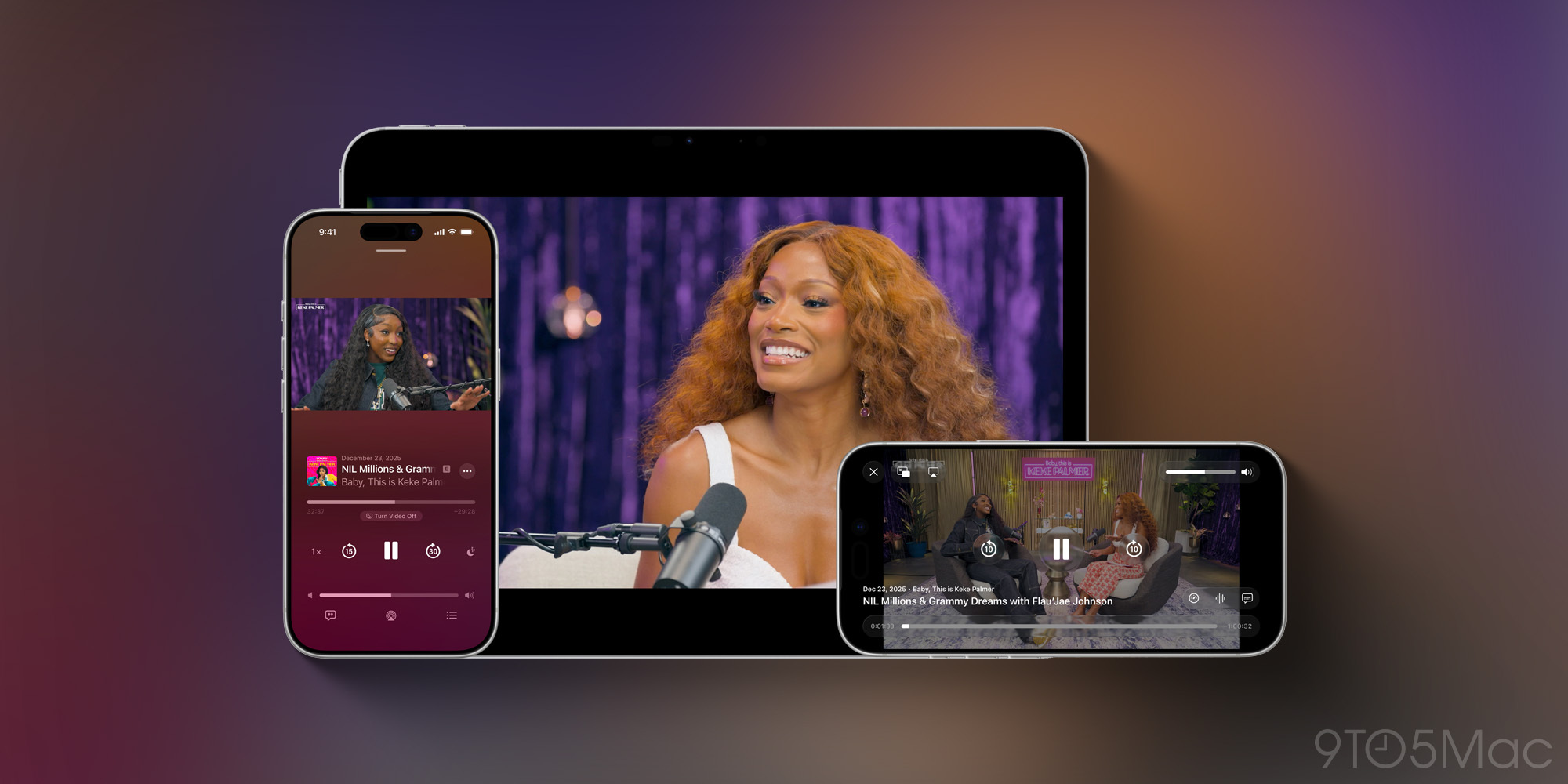
Meanwhile, Spotify has announced plans to also adopt Apple’s HLS technology for video podcasts.
The move will allow creators to easily distribute video podcast shows for Apple Podcasts and Spotify.
“Starting this year, Spotify for Creators and Megaphone will support Apple Podcasts’ HLS video technology,” the company says.
“This will allow Spotify-hosted creators to distribute their video podcast content across platforms, reaching audiences on Spotify and Apple Podcasts without changing their existing setup – a major step toward truly platform-agnostic video distribution.” »
More details on the upcoming Spotify and Apple Podcasts video distribution
Additionally, Spotify will support “monetization of video content on Apple Podcasts so creators don’t have to choose between audience and revenue.”
Spotify says it is “actively working on this integration in coordination with Apple” and will have more to share on “timeline details” in the near future.
As part of the announcement, the company includes two additional details about distribution from Spotify platforms to Apple.
First, there’s this about the difference between distribution between platforms:
In order to provide Spotify’s premier streaming features, Spotify requires content to be directly uploaded to the platform instead of distributed via standardized methods, such as RSS.
This allows us to provide creators with the powerful tools they need to take full advantage of the power of Spotify streaming, such as monetization based on real user engagement, real-time performance analysis, and much more.
While this changes the way video shows are distributed on Spotify, it also makes it easy for creators to take advantage of Spotify’s benefits while still using RSS for distribution elsewhere.
Then there is this detail on managing monetization across all platforms:
We’ll share more information soon about how video monetization for videos distributed by Apple Podcasts will work through our creator platforms. However, our goal is to make monetization easier, regardless of where your content is viewed.
Spotify expands video support to major podcast hosting providers
In addition, Spotify is announcing new ways to offer video podcasts on its platform.
Earlier this year, we announced that major podcast hosting providers would integrate with Spotify Distribution API to support video. Today, Libsyn, Podigee, Audioboom, Audiomeans and Podspace are officially live.
This means that creators using these platforms can now distribute video content directly to Spotify and monetize eligible content through the Spotify Partner Program.
In the near future, partners will also have access to additional monetization options, including direct sales. With additional partner integrations In progress, this momentum is only accelerating.
Although the Apple HLS changes are expected later this year, these changes are in effect starting today.
Take from 9to5Mac
Spotify’s announcement that it is working on supporting Apple’s enhanced video podcast technology is great news for podcast listeners and creators.
Spotify has been instrumental in promoting video podcasts. Apple’s implementation came much later, but the underlying technology is solid.
While Apple’s Video Podcast push has created feature parity for modern video podcast playback, it’s also created a divide in how creators make shows.
Today’s announcement from Spotify shows how everyone can benefit from advances in video podcast technology starting later this year.

FTC: We use automatic, revenue-generating affiliate links. More.
