The media is full of anecdotal accounts of patients hiding their use of GLP-1 weight-loss drugs, passing off their success as mysterious new reserves of self-discipline. The simple reason, I believe, is that these medical interventions are not sick, twisted, base or metallic.
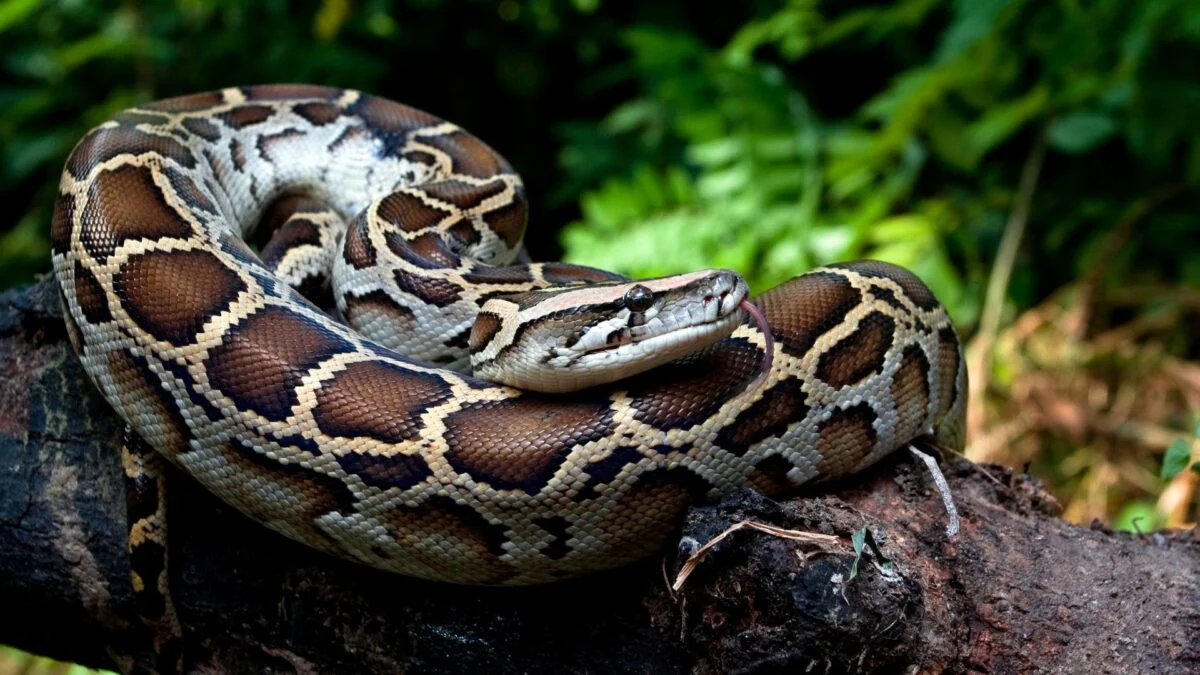
But researchers have discovered what they call a “perfect example of nature-inspired biology,” with the potential for an arguably much cooler weight-loss drug: metabolites from the blood of Burmese pythons.
Scientists from Stanford University, Baylor and the University of Colorado Boulder collaborated on the effort, which began with a search for the unique chemical signals that allow pythons to go months, even a year or more, between their giant, gut-wrenching meals. What makes the finding so promising, however, is that researchers also discovered that this metabolite, para-tyramine-O-sulfate (pTOS), is also produced naturally (albeit in smaller amounts) in humans after they themselves eat a large meal.
Study co-author Jonathan Long, a member of Stanford’s Wu Tsai Neuroscience Institute, attributed the finding to the team’s willingness to go to the extreme.
“If we truly want to understand metabolism,” Long said in a statement, “we need to go beyond observing mice and humans and examine the greatest metabolic extremes that nature has to offer.”
Made by both human and python gut bacteria
Metabolites are a broad category of small molecules. Any intermediate or final product made by a living being by breaking something down into the energy and/or raw materials it needs to grow is eligible. And in the case of the Burmese python, researchers have had plenty to examine.
The team fed meals of about 25 percent of their snake’s body weight to test groups of younger, smaller (more maneuverable) Burmese pythons, each weighing about 3.3 to 5.5 pounds (1.5 to 2.5 kilograms). The snakes produced at least 208 unique metabolites following their large, overdue meals, the researchers said.
All of these compounds reached more than 32 times their normal concentration in the pythons’ blood in the hours after feeding, but pTOS concentrations climbed to more than a thousand times their normal levels.
“When we administered pTOS to laboratory mice at levels similar to those observed in pythons after eating, we saw no effects on energy expenditure, beta cell proliferation, or organ size,” Long explained in a statement. “What it regulated was the mice’s appetite and eating behaviors.”
In other words, pTOS provided appetite-suppressing signals without causing loss of energy, gastrointestinal problems, or muscle loss.
“We have essentially discovered an appetite suppressant that works in mice without some of the side effects of GLP-1 drugs,” said the study’s lead author, Leslie Leinwand, distinguished professor of molecular, cellular and developmental biology at CU Boulder.
Further study explained why: High doses of pTOS acted on the hypothalamus, a region of the brain known to manage hunger, thirst, and other physiological moods, like libido and sleepiness. (GLP-1s, on the other hand, act on a multitude of organs in the body, including the pancreas and stomach.)
In subsequent research, the team discovered that pTOS was produced by the breakdown of tyrosine, a common amino acid in proteins, by bacteria in the intestine and liver. Although mice do not produce pTOS, analyzes of human urine have shown that we produce it in small amounts, particularly after eating.
A bright future for snake-based medicine
The researchers hope to continue studying other metabolites that were increased in pythons in their lab. Some appeared 500-800% above their baseline levels after the snakes’ big meals.
It may be counterintuitive, but the practice has a long history. Compounds derived from snake venom, for example, have led to the development of new blood pressure medications and anticoagulants, drugs that can treat deadly blood clots. Even GLP-1 has a pretty interesting history: the popular peptide drug is said to have been inspired by a hormone from the venomous Gila monster. (Advertisers should rely more on this.)
“We’re excited to learn from these snakes and other ‘extreme’ animals to inspire future discoveries,” Long said. “Obviously we’re not snakes. But perhaps by studying these animals we can identify molecules or metabolic pathways that also affect human metabolism.”