
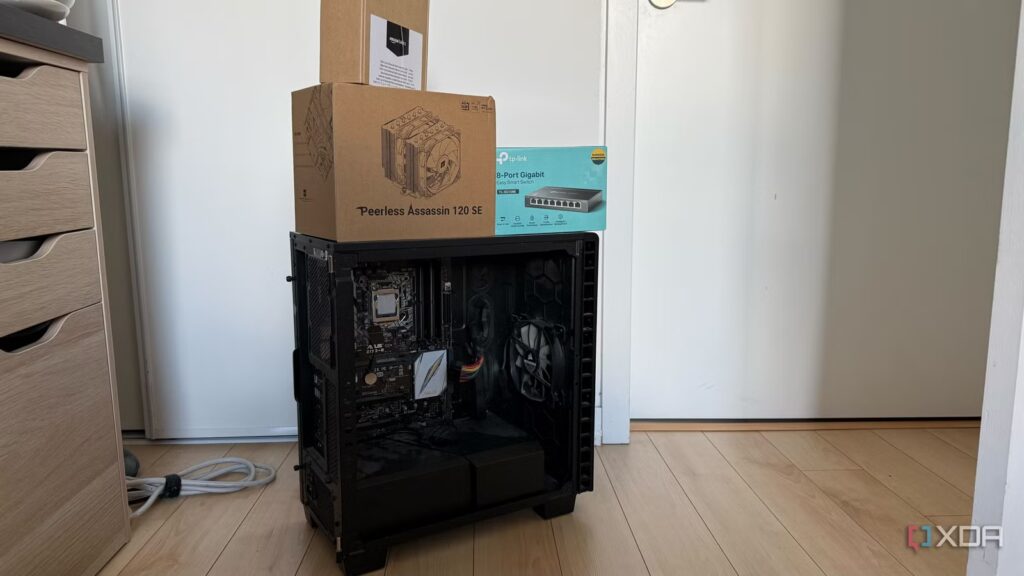
For years I stared at a dusty old gaming rig that sat in my closet. It has an i7-6700K, a GTX 1070 and 16GB of RAM, all perfectly functional, but had long since been replaced by my current rig many moons ago. Meanwhile, my Google One, iCloud, password manager, and entertainment subscriptions have been accumulating damage every month. Finally, I decided it was time to call it a day and put this old machine to good use.
I spent less than $200 to outfit my old rig with a new CPU cooler, install a new managed Gigabit switch, a handful of Ethernet cables, and a few 2TB drives from other systems in my house that were sitting idle. At first I only planned to build a home laboratory, but the result turned out to be even better. It’s transformed into a happily humming home server, doing more for me than the cloud services it replaced.
9 Docker Containers That Run 24/7 on My $100 Mini PC
Maximum value budget homelab.
I hadn’t originally planned to replace subscriptions, but it was a logical step
4 subscriptions that no longer made sense
I had originally planned to install something like Proxmox purely for experimentation purposes, but it quickly ended up hosting a bunch of self-hosted services, some of which immediately replaced my subscriptions.
First to go was Google One, the Docs storage component I swapped out for Nextcloud. File syncing on my laptop and phone works as you’d expect, the mobile apps are functional, even flashy. The web UI isn’t as fast as Google’s and the initial setup was a bit difficult, but for the actual task of keeping my files in sync and accessible, the exchange was really clean.
My iCloud subscription was next, which housed the majority of my photos. Immich has matured quickly over the past couple of years, and AI-based search, facial recognition, and timelines truly stand up to what Apple and Google are offering. I can easily search for beach photos and get concrete results, for example. The mobile app handles automatic background saves better than I thought, and the fact that it’s completely self-hosted is huge.
Vaultwarden is the successor to my paid password manager, and this one barely deserves a paragraph because it’s so simple. It’s a lightweight server implementation compatible with Bitwarden’s clients, runs in a single Docker container with virtually no resources, and syncs across every device I own. Functionally, I can’t tell the difference between this and what I was paying for.
Finally, Jellyfin replaced some (not all) of my entertainment subscriptions. Some services I keep subscriptions to simply because it’s easier than reading my own library, both physical and digital, and these can be easily replaced with Jellyfin. Obviously, this isn’t a replacement for something like Netflix or Apple TV, both of which offer streaming-only exclusives.

- iOS compatible
-
Yes
- Android compatible
-
Yes

How I Replaced All Those Streaming Services With One Self-Hosted App
Cut the online streaming cord with this free, self-hosted app.
Why a Gaming PC Was the Perfect Launch Pad
It had everything I needed to get started without spending a fortune

Gaming PCs are a great starting point for a home server, and even when they’re not in working order to begin with, getting one back into working order doesn’t require a fortune, especially if the core components are intact. My 6700K and 16GB of DDR4 handled every home server and lab workload I threw at it. Most modern self-hosted applications are delivered in Docker, which consumes resources. We’re talking at most a few megabytes of RAM and a few percent of the processor. Nextcloud and Immich are probably the heaviest services I use, and Immich relies specifically on my GPU. Transcoding for Jellyfin is not done with NVENC, but rather with Intel Quick Sync, which is extremely lightweight and efficient.

It’s Not Just Jellyfin and Nextcloud, Here’s How I Saved Money Using My Home Lab
You can save much more than self-hosting media and documents.
The savings are real, even after electricity costs
Running something like this costs almost nothing per month

The system consumes around 80 watts on average, which equates to around 58 kWh per month. At Ontario’s all-inclusive residential rate of about 16 cents per kWh after the Ontario electricity rebate, that’s about $9 per month in electricity. The four subscriptions I cut out earned me a little over $40 per month combined, so the net savings came to about $30 per month, which adds up quickly when you spread it out over a year.

5 open source apps so good their premium versions are worth paying for
No paywall, just worth paying.
I am now responsible for maintenance
Less complicated than before, but still important
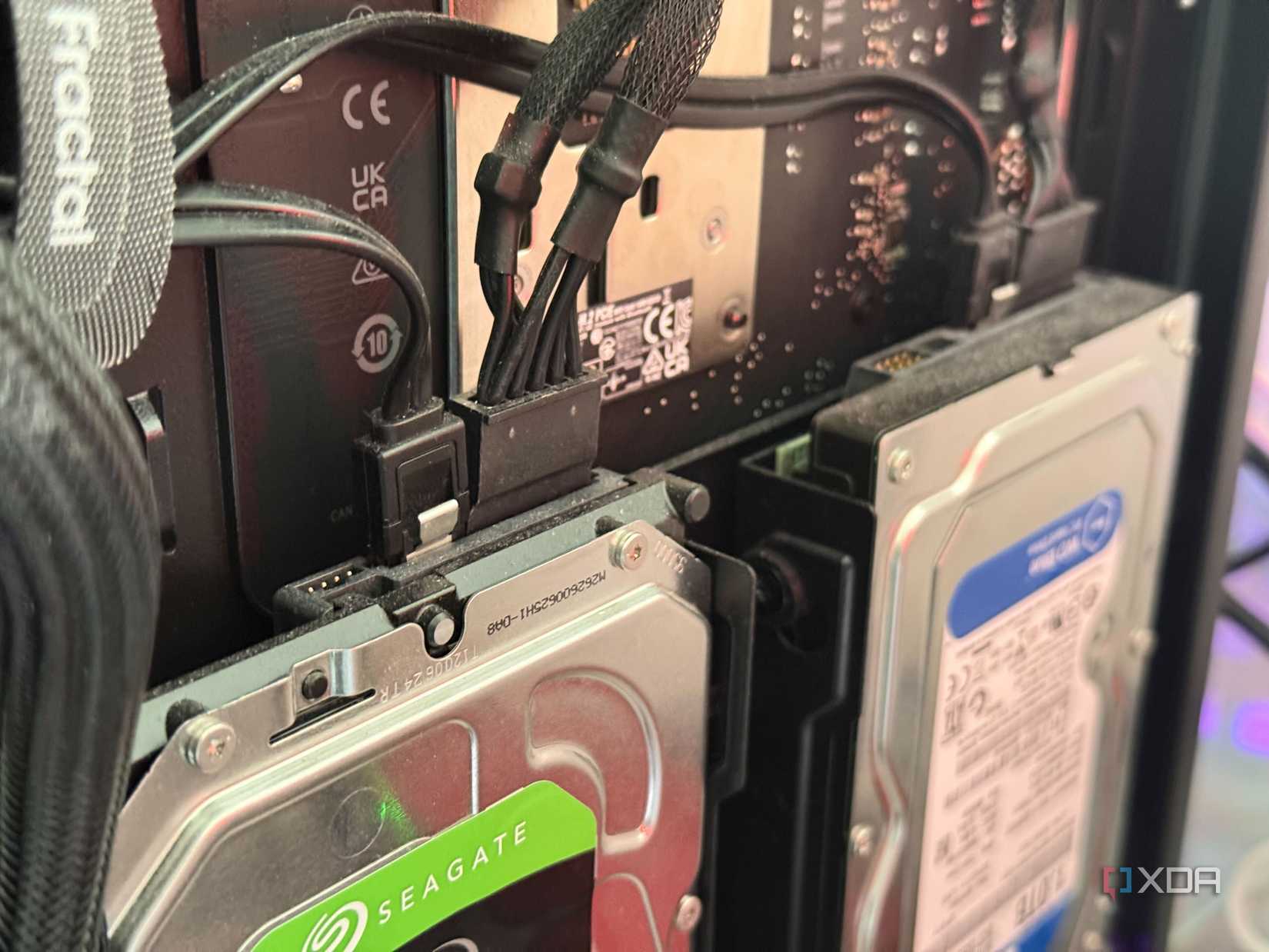
The benefit of paying for subscriptions is that they buy you the right to make Google’s outages Google’s problem. When you self-host, every disk failure, every botched update, every expired certificate, every ISP problem suddenly becomes your problem and yours alone. I had a Nextcloud update that broke syncs overnight and I spent a Saturday morning fixing the problem.
That said, preventative maintenance is pretty simple these days, and since everything is contained in a Docker Compose file, I can update things with a few changed lines. Storage fees are high, and once my family gets past the few terabytes I have in there, I’ll have to bite the bullet for a few hundred dollars of additional storage, but I’ll cross that bridge when I get to it.

It took some work, but I’m now in love with these 6 self-hosted services
Self-hosting was an amazing trip
Subscriptions are useful, but a home server can replace many
The 6700K isn’t a fast chip by 2026 standards, the GTX 1070 is a few generations behind, and yet between them they run a stack that truly rivals the services I was paying real money for. The hardware bar for self-hosting is very low, and even for things that aren’t a direct replacement for a subscription, it’s worth dusting off an old system.
