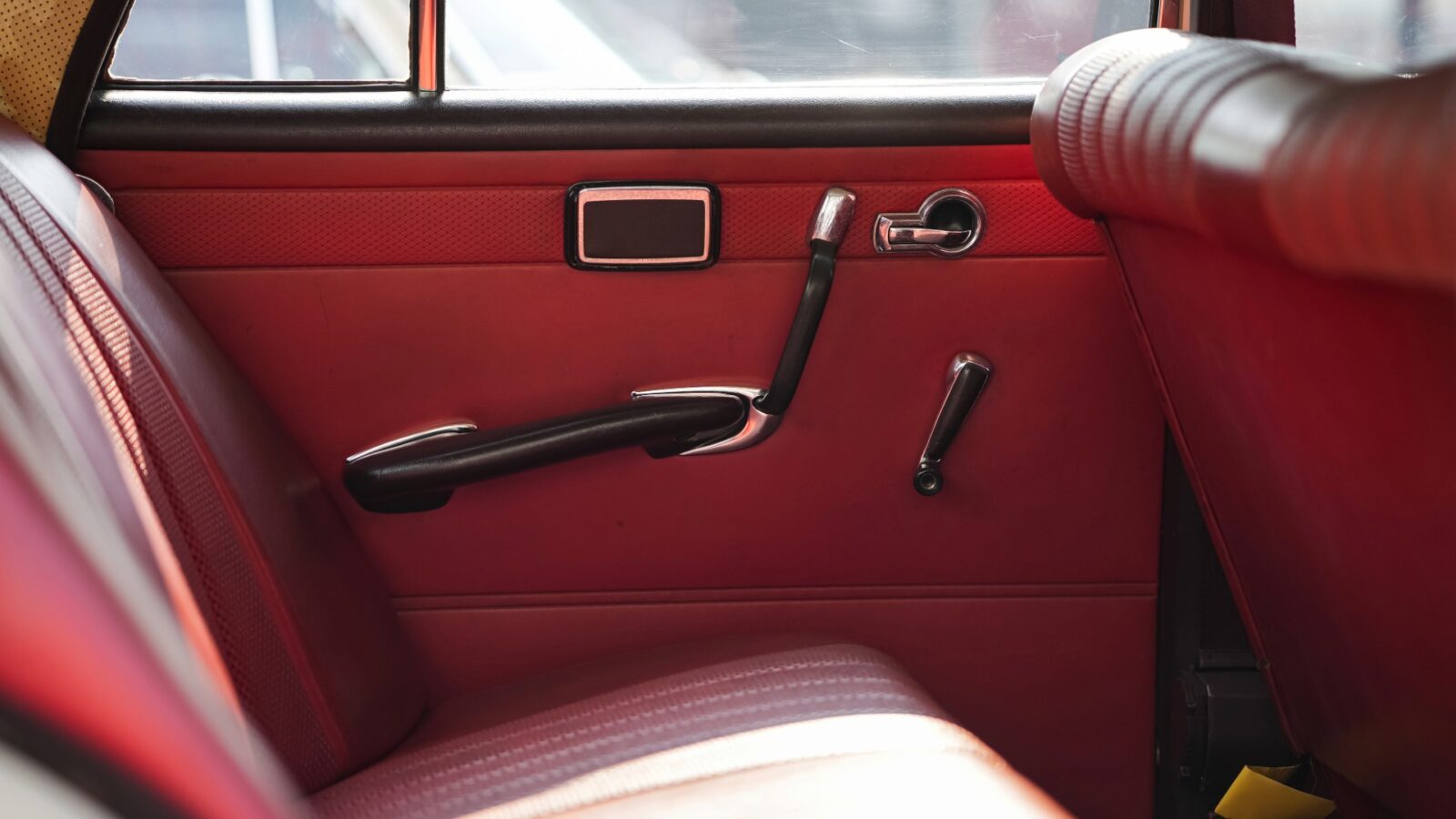
In urban areas, the famous “door accidents” represent around 10 % of collisions. A quick parking, a door open to the hurry without necessarily looking in the rear view mirror … This common situation can cause serious accidents. A technique little known in France but already commonplace in low countries could avoid a good part of the accidents: the Dutch handle.
What is a Dutch handle, and why can it reduce the number of accidents?
The Dutch handle is a very simple method which allows you to open the door of a car by avoiding being inattentive to what is happening outside the passenger compartment. Instead of using the left hand to open the left door, or the right hand to open the right door, the Dutch handle simply makes the opposite. Thus, the driver will open the left door with his right hand. The simple rotation of the bust, absent in the conventional opening, will naturally encourage the driver to take a look at his rear view mirror as well as to his blind spot. The same goes for the passenger side: opening the right door with the left hand allows you to better visualize the possible passage of other users on the roadway, while making the exit of the vehicle more secure.
This may seem superficial, but, in practice, many collisions can be avoided thanks to this technique. Indeed, a few seconds are enough to notice the presence of a cyclist, a pedestrian or another car before opening the door.
If this little tip has this name, it is because it has become a real automation in the Netherlands. Known for its bicycle culture and impressive cycle infrastructure, the country has long integrated this practice and teaches it in all its driving schools. So much so that other European countries, driven by European institutions, wish to implement the Dutch handle, or even oblige its teaching in school schools.
Towards a generalized adoption?
The Dutch handle is a practice still little known in France, but a large number of countries have already put it in place more or less officially. In the United Kingdom, the “Highway Code”, equivalent to the highway code, recommends the use of the Dutch handle to get out of a vehicle. In the United States, the Dutch handle is promoted as a good road safety practice, but is not legally compulsory. However, she gained in recognition thanks to awareness efforts, and her defenders have even created a dedicated site, www.dutchreach.org, which lists news, videos and educational content.
At the European Union level, Parliament has decided to integrate the practice as a standard element of driving exams throughout the EU, as part of new road safety legislation. This decision aims to reduce accidents involving cyclists and is part of wider efforts to reach zero deaths on the road by 2050.
In France, the Dutch handle remains a recommendation for the moment and has not been formalized in the Highway Code. Today, this contains a more general rule on the opening of doors: according to article R417-7, it is prohibited for any occupant of a vehicle stopped or parking to open a door when this maneuver constitutes a danger to itself or the other users. In the event of a breach of the rule, the applied fine is that of first class tickets, which is now 38 euros maximum, in the same way as non-compliance with parking rules.
More cyclists = fewer accidents?
The statistics on accidents involving cyclists are rather encouraging, especially when we take into account the fact that the practice of cycling, in clear resurgence from the pandemic, increased the number of interactions between cyclists and motorists in the city. Between 2022 and 2023, cycling has increased by more than 5 %, confirming an increasing trend that has been taking place since 2019: between 2019 and 2023, cycle attendance increased by 37 % at the national level, with an increase of 40 % in urban areas.
With the significantly higher number of cyclists on the roads, the number of accidents per cyclist is down and confirms an interesting concept: the principle of “security by the number”. The more cyclists, the more predictable and visible for other road users. This encourages drivers to be more vigilant and to adapt their behavior to avoid collisions. Studies show that in cities where cycling is highly practiced, the risk of an accident by cyclist is decreasing. This phenomenon is observed in several European countries and begins to be noted in certain French cities.
Is the solution against accidents therefore to encourage the practice of cycling even more? If you are not ready to leave the car in the garage, keep in mind the Dutch handle technique, you could save the life of a cyclist!