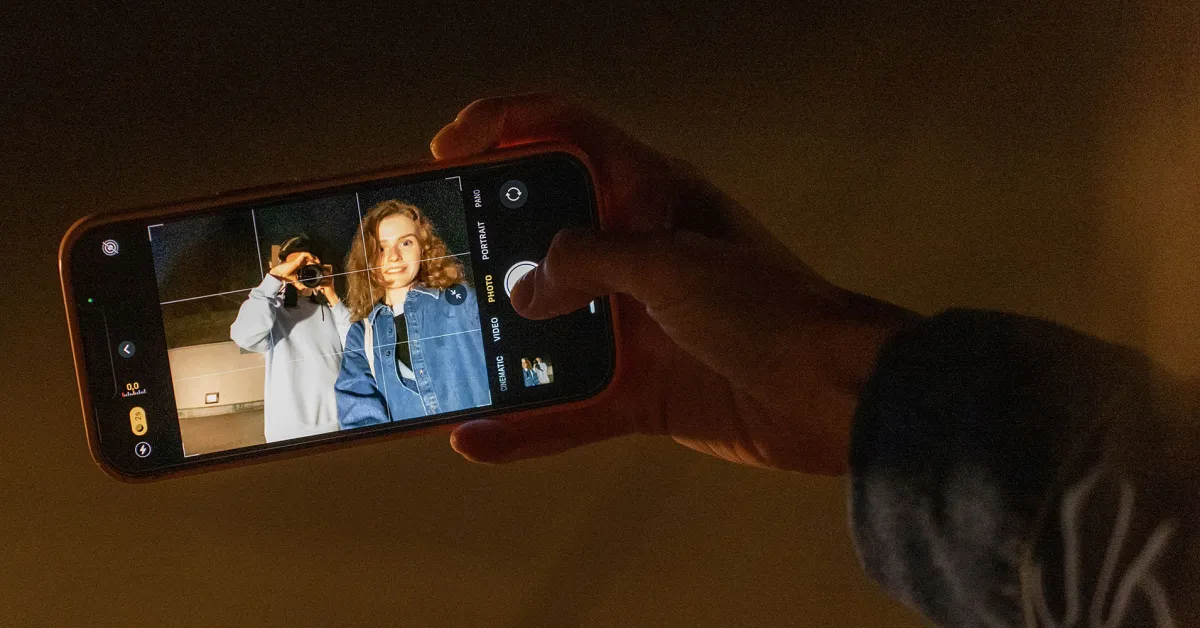
This might be the best thing to ever happen to Apple’s Camera app
Apple’s Camera app started with a very simple goal: it was intended to allow anyone to pick it up, press a button, and get a decent result. This essentially made an iPhone the ultimate point-and-shoot camera.
But over the years, the application has become more and more sophisticated. While this can be a good thing, it comes with increasing complexity. Finding the setting you want can involve a lot of guesswork as to where it will fit in the ever-expanding user interface. Fortunately, it looks like iOS 27 can fix this problem…
That works
Most people are not interested in photography. They just want to take a camera, point it at someone or something and press the button. Before smartphones, there was an entire category of cameras called point-and-shoot intended to make this possible.
Getting good results with a compact camera is surprisingly tricky. If the camera is going to make all the decisions, rather than relying on help from the user, you actually need some pretty sophisticated under-the-hood programming. For example, cameras have scene recognition that allows them to determine what you’re photographing and then automatically choose the most appropriate settings for the shot.
The iPhone camera app takes this approach. For example, it will recognize faces, automatically focus on them and set the appropriate exposure so that people are properly lit even when shot against a bright background. Additionally, iPhones perform a lot of processing on the photo after it is taken to provide the best result for each type of shot.
This is still true today and an iPhone will generally give decent results in the vast majority of situations without the user having to think about any of the settings.
The advantages and disadvantages of manual controls
For a while, the original camera app remained very simple, and anyone wanting to take manual control usually used a third-party camera app. Over time, however, Apple has increased control over its own app.
For example, if you tap the settings icon at the top right and then tap Styles, you can manually adjust the tone and color settings using a two-axis pointer.

This degree of control is great for creativity but introduces complexity to the user interface. The camera control button UI was, I hope, of maximum complexity – integrating many controls into an extremely delicate and touch-sensitive combined slider, clicker and trigger.
Solution announced by Apple
A Bloomberg A report yesterday says that Apple plans to fix this issue in iOS 27. It suggests that users will be able to choose which settings appear and where they are placed.
Apple plans to make the Camera app interface fully customizable so users can choose their own set of controls – called widgets – that run at the top of the interface. The app will continue to launch with the same default set as today, including toggles for resolution, night mode, flash and live photos, but users will be able to upgrade to a range of “advanced” options or choose their own elements.
This seems to me to be the best of both worlds. This will allow users to hide features they never use and bring features they do use to the forefront.
For example, I literally Never use the flash. Having this button on the screen is not only a waste of space, but also unwanted clutter. To be able to have the orders that I TO DO using immediately accessible while hiding the rest would be the perfect approach.
I really hope this report is accurate; And you ? Please share your thoughts in the comments.
Photo by Anastasiya Badun on Unsplash

FTC: We use automatic, revenue-generating affiliate links. More.