
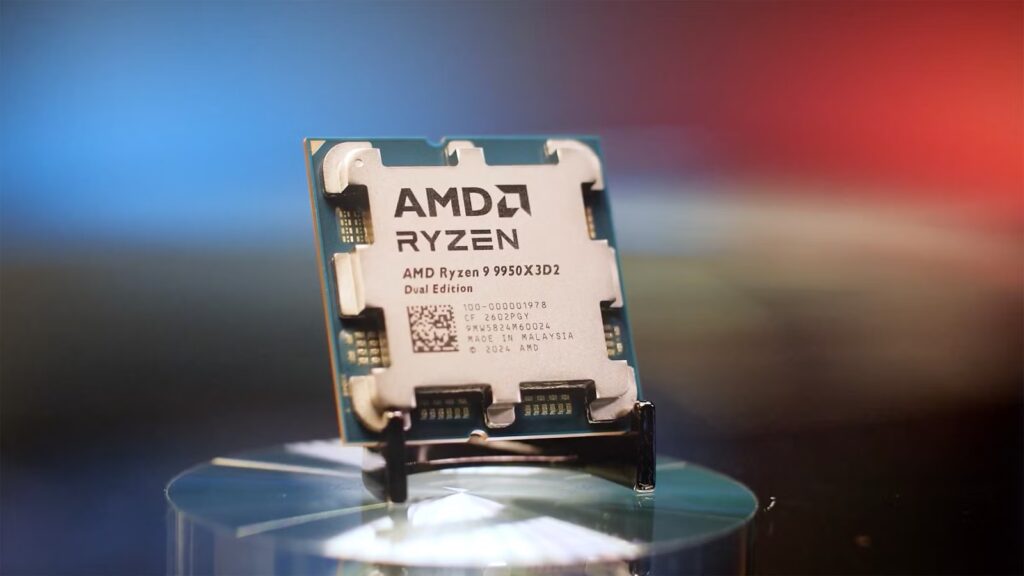
AMD’s Ryzen 9 9950X3D2 is a $900 mainstream CPU, and for those who take a quick look at the chip, the spec sheet will make a compelling argument. Featuring 16 cores, 32 threads and a whopping 208MB of total cache with 3D V-Cache on both CCDs for the first time, this is undoubtedly an engineering marvel that no one can deny.
When hardware specs are undeniably sound, the conversation turns to value, and this is where the Zen 5 processor finds itself in a difficult situation. X3D processors have historically owned the conversation for gaming performance while pulling double duty for a specific breed of developers and creators, so it’s a curious pivot to see AMD planting its flag almost exclusively in the developer and creator camp with this one, because in this territory, a 200W TDP and 5-8% generational increase aren’t the numbers you’d want to see attached to a $900 price tag.
What’s wrong with the Ryzen 9 9950X3D2?
The nine hundred dollar problem
Perhaps the most confusing aspect of the 9950X3D2 is where its fiercest competition comes from. The 9950X3D and 9950X occupy the shelves just below, and at significantly lower prices, they both make strong arguments against the successor in the consumer market.
In Puget Systems’ Cinebench 2026 multithreaded test, the 9950X3D2 leads the 9950X3D by just 6% and the 9950X by 9%, while leading the 9950X3D by 2% and tied with the 9950X in single-threaded workloads. In terms of gaming, Tom’s Hardware benchmarks, based on a geomechanical average of 17 games, found the dual-cache CPU to be just 0.8% faster than the 9950X3D, with a tiny 1.3% improvement in a 1% low. For context, analysts also found that the Ryzen 7 9800X3D released in 2024, launching with a box price of $479, actually outperformed the 9950X3D2 at 1080p. This data clearly explains why AMD chose to market the processor exclusively for developers and creators.
Now, marginal generational increases are not an astronomical event in the hardware industry, but the problem with the new Zen 5 processor is proportion. There’s a difference between a modest generational leap and asking buyers to pay a flagship premium to get one. The 9950X3D launched at $699, while its rumored successor carries a $200 premium over that amount. The performance data doesn’t make a compelling argument for this model, especially not in a die-hard consumer segment. And that’s before you even look at the competition across the aisle.
The price/performance conundrum
A $900 token with a $300 rival?
The confusion doesn’t quite stop at comparing the 9950X3D2 to its predecessors, especially as Intel’s offerings have become more competitive since the release of the Core Ultra 7 series. In the same single-threaded Cinebench 2026 tests conducted by Puget Systems, the Core Ultra 7 270K Plus scored 5% higher than the 9950X3D2, a CPU retailed for about $300. That’s a pretty tough number to accept when the chip it outperforms costs three times as much.
The energy consumption side of the equation tells the same story and makes the purchase even more questionable. Under multithreaded loads, Club386 reviewers observed that the system running the 9950X3D2 consumed 417W peak, about 55W more than the 270K Plus, meaning the only comfortable way to run the CPU would be with a 360mm AIO. All of these factors place a heavy burden on additional V-Cache, and only a limited number of workloads could benefit from it, such as those related to code compilation, scientific simulation, and local AI inference.
AMD has a new flagship, but who is it for?
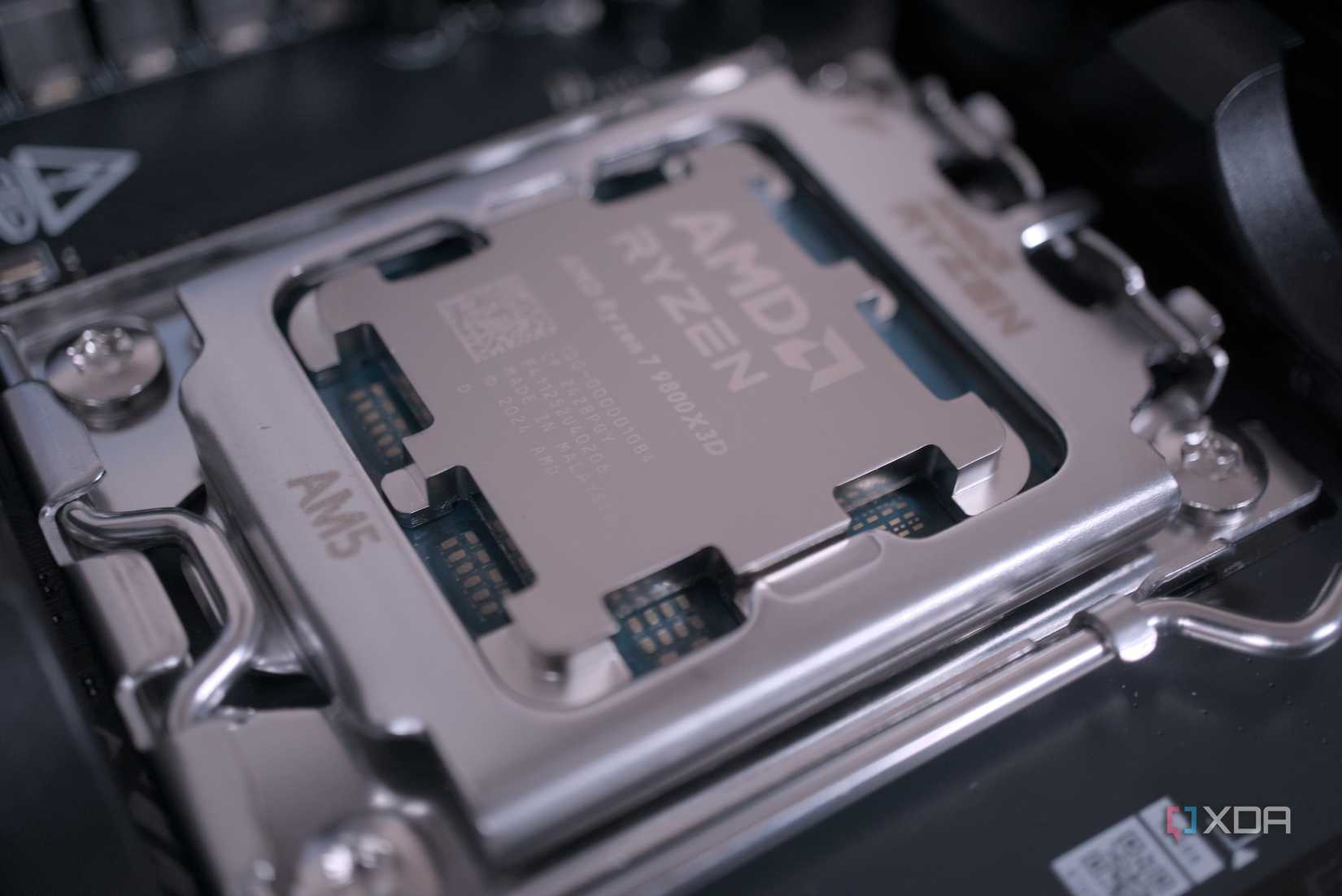
Objectively, the 9950X3D2 is the highest performing consumer desktop processor AMD has ever built. It’s certainly being touted as a niche product, and there’s no doubt that for a specific class of professionals running heavy rendering or AI workloads, this will be the go-to choice. However, its economic aspect means that it will only appeal to a narrow segment of buyers, and even in those segments, the 270K Plus gives it strong competition while having no competition with it, especially given its price.
There is also a larger question lurking in the minds of potential buyers. Is now a good time to spend $900 on a consumer processor? Component prices are already under significant pressure, with DRAM costs rising and GPU prices showing few signs of relief. With Zen 6 on the horizon, patience might be the most defensible position, especially when competitive alternatives exist. substantially lower prices.
An engineering marvel, but not a competitive product
The Ryzen 9 9950X3D2 looks less like a polished offering meant to leave the competition in the dust, and more like an expensive proof of concept for dual 3D V-Cache. Unless one is looking for the benefits of its niche cache and their workflow benefits solely from its integration, the premium is extremely difficult to justify. Even so, in mainstream markets the price differences will be felt much more profoundly than what dual V cache could offer.
