
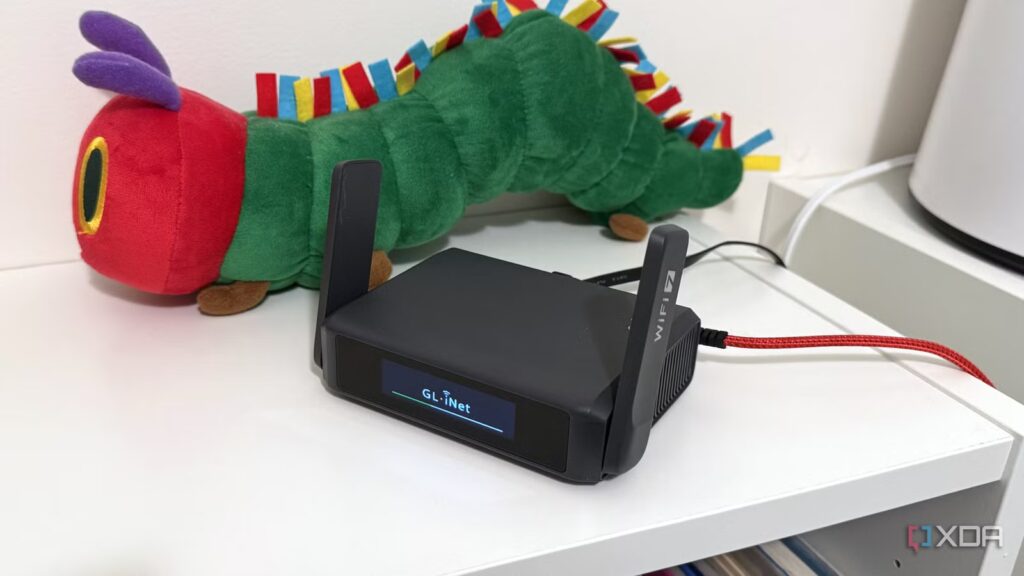
A flagship Wi-Fi 7 mesh system could cost you around $600. Let’s say you bought one six months ago and you have 2.5Gbps fiber, so realistically you have all the latest technology, but somehow 49 of your 50 devices still show Wi-Fi 6 or Wi-Fi 6e in their signal properties. The only things that actually use Wi-Fi 7 are your Samsung Galaxy S26 Ultra or Pixel 10 Pro. Your $3,000 MacBook Pro, your Smart TV, and your entire IoT fleet are completely oblivious to the 320 MHz channels they’re installed on.
Right now, Wi-Fi 7 is a brilliant standard, but it has a huge hardware debt. We are currently in the empty lanes phase, where the infrastructure is ready, but customers are still under pressure. They’re stuck in the slow lane. Wi-Fi 7 is a definitive example of early adopters’ remorse right now. While the Wi-Fi Alliance has officially passed the milestone of mass development, your home network remains a ghost town of Wi-Fi 7’s potential.
Wi-Fi 7 is getting cheaper but you still don’t need it (yet)
Technical barriers
Your devices are not ready yet
So what technical barrier are we really facing? The main selling point of Wi-Fi 7 is the ultra-wide 320 MHz channel in the 6 GHz band; However, to use it, a device needs a Wi-Fi 7 radio. Even in 2026, many new mid-range laptops and tablets still come with Wi-Fi 6e chips to save $5 on the BOM. This means that as a result, your router is broadcasting a huge empty digital highway, but your iPad Pro M4 and your old laptop are still crowded into the 160 MHz lanes, sometimes colliding with each other.
Despite spending hundreds of dollars to upgrade to Wi-Fi, the devices in your home are still not ready to take advantage of it, leaving all these features behind and effectively useless. When purchasing new devices, if you’re hoping to take advantage of Wi-Fi 7, make sure those new devices are actually compatible with Wi-Fi 7. It’s not completely widespread yet, but it’s certainly more common than it was just a few months ago.
Another feature you paid for but can’t actually use is multi-link operation, sometimes called MLO. It allows a device to connect to the 5GHz and 6GHz bands simultaneously for low latency. The adoption gap is huge; This is the flagship feature of Wi-Fi 7, but because it requires deep integration between the operating system and the wireless card, your 2024-era devices will never be able to support it. The sad reality is that without MLO compatible devices, your router is just a very expensive and slightly faster Wi-Fi 6e hotspot.
Maybe there is some hope
Sustainability is as good a reason as any

Even when you can use Wi-Fi 7, there’s a bit of a congestion trap here. While Wi-Fi 7, in general, handles congestion much better, it doesn’t magically upgrade your cheap $15 smart plugs. This means that more than 40 IoT devices still use 802.11n logic, also known as Wi-Fi 4. They take up airtime on the 2.4 GHz band, and while Wi-Fi 7 has the tools to get around them, they don’t benefit at all from the efficiency of the new standard. This means your smart home is just as slow as it was on Wi-Fi 6, because the smart components haven’t actually changed since 2019.
Yes, sure, Wi-Fi 7 means you can deal with congestion a little easier, but that’s only the case if your devices can actually take advantage of it. However, there is some hope here with Wi-Fi 7. Sometimes the only device that can use it still matters, and that offers a glimmer of hope. If you have a mesh system, Wi-Fi 7 works behind the scenes. It gives you a backhaul win because it uses those Wi-Fi 7 speeds for backhaul, which is the connection between nodes. This means your Wi-Fi 6 devices get faster access to the internet, even if they don’t speak Wi-Fi 7 themselves.
It is also a question of sustainability. When more devices can actually take advantage of Wi-Fi 7, you’re already here and ready. You are the first person in the neighborhood to have the 6 GHz fast lane. As you upgrade your laptop or phone over the next couple of years, the list of devices will grow and you won’t have to touch your router again until 2030.
Eventually, your devices will use Wi-Fi 7
Right now, it feels a bit like Wi-Fi 7 is like owning a private jet, but only having one runway in the world to land on. What’s the real point of having it?
Right now, if you’re not yet connected to Wi-Fi 7, maybe don’t buy a Wi-Fi 7 router for the devices you own today, especially if you’ve taken note of the fact that many of them in your home aren’t actually compatible with Wi-Fi 7. That doesn’t mean you can’t buy it at all, because if you’re hoping to future-proof your network and enjoy the best mesh system, then Wi-Fi 7 is a great upgrade. Don’t expect to take advantage of its full capabilities anytime soon.
