
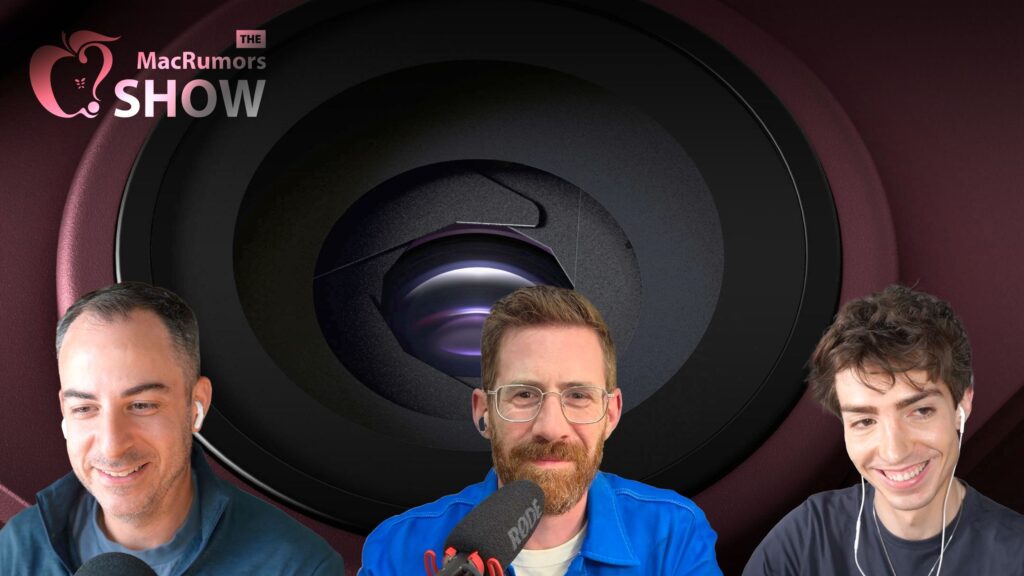
Photographer and videographer Tyler Stalman joins us on this week’s episode of The Woozad Show to examine whether the iPhone 18 Pro’s camera is a compelling reason to upgrade, how its new features affect everyday shooting, and what photographers gain or give up with the iPhone Duo.
The iPhone 18 Pro’s main camera combines a new 48-megapixel sensor, a faster variable aperture lens, and updated image processing. The variable aperture offers settings of ƒ/1.48, ƒ/1.8, ƒ/2.8 and ƒ/4.0. The iPhone 17 Pro has a fixed aperture of ƒ/1.78, so the new lens’s widest setting admits about 45% more light at aperture values alone, or a little more than half a stop of exposure. Apple claims about 50% better low-light performance for the entire main camera system.
At ƒ/2.8 or ƒ/4.0, people standing at different distances in a group photo can remain sharper, provided there is enough light to compensate for the smaller aperture. A narrower aperture can also allow video to use a slower shutter speed in bright conditions, producing more natural motion blur. At ƒ/1.48, the camera offers more light for indoor photos and potentially shorter exposures in Night mode. The wider aperture should also reduce the need for Night mode in certain situations. The camera defaults to ƒ/1.8, close to the 17 Pro’s fixed aperture, but the new sensor and processing still affect photos taken at that setting.
Pro controls add manual aperture, shutter speed, and white balance adjustments, plus a live histogram right in the camera’s native app. Users can pin their most used settings to the top of the viewfinder, which is a major practical improvement for professionals. For example, shutter speed helps control frozen action or intentional motion blur, while white balance can help prevent greenery from becoming too blue by automatic settings or maintain a consistent appearance between video clips.
Photographic Styles 3 goes further with the ability to adjust tone and color while preserving skin tones, and new controls add Soft Skin, Glow and Film textures, with grain that can be matched to any of them. The Film setting aims to reproduce more of the character of an analog photograph, including its grain and the glow around highlights. The strength of the effects can be adjusted and the style can be changed after capture. Tyler tested the film aspect of the iPhone 18 Pro against a film SLR loaded with Kodak Portra 400.
Apple Reference Image signs data from the new iPhone 18 Pro main camera sensor during capture, creating a secure digital negative that can be compared to an editable photo. Meanwhile, iOS 27’s Photos tools can change perspective with Reframe, generate a landscape beyond the original edges of an image with Extend, or remove larger objects with Clean Up. The reference image leaves room for creative editing while giving photographers a way to show off what the sensor has captured, provided they have enabled the mode before taking the photo.
Meanwhile, the iPhone Duo’s camera system features a 48-megapixel main camera with a fixed ƒ/1.6 aperture and the same 48-megapixel ultrawide camera as the iPhone 18 Pro. Its main camera shares a 26mm focal length, ƒ/1.6 aperture, and hybrid focus pixels with the iPhone 17e, leading some to wonder why Apple’s most expensive iPhone appears to have similar camera hardware to an entry-level model. That said, the Duo has optical sensor-shift image stabilization, which the 17e lacks, and Apple hasn’t disclosed enough details about the sensor to establish that the two phones use identical hardware.
Compared to the iPhone 18 Pro, the iPhone Duo also lacks a dedicated telephoto lens, variable aperture, manual Pro controls, reference image, and professional formats including ProRAW and ProRes. The foldable design of the iPhone Duo provides a different case for its camera. Smart Take can capture a group photo when everyone is posing, Kid Cue plays animations on the exterior screen to grab a child’s attention, and Duo Preview lets subjects see a live photo taken of them with the rear camera. The phone can also be left partially open for hands-free shots.
Looking to the future, Apple is reportedly working on a custom image sensor that could arrive as early as next year with the 20th anniversary iPhone.
Check out more of Tyler’s work on his YouTube channel or on X @stalman. The Woozad Show has its own YouTube channel, so make sure you’re subscribed to keep up with new episodes and clips.
You can also listen to The Woozad Show on Apple Podcasts, Spotify, Overcast, or other podcast apps. You can also copy our RSS feed directly to your reader.
If you haven’t already listened to the previous episode of The Woozad Show, catch up on our iPhone Duo debate and discussion on first impressions of the AirPods 5 and the merits of Apple’s latest upgrades for iPhone and Apple Watch.
Subscribe to The Woozad Show for new episodes every week, where we discuss some of the breaking news here on Woozadoften joined by interesting guests such as Michael Fisher, Kayci Lacob, Kevin Nether, John Gruber, Mark Gurman, Jon Prosser, Luke Miani, Matthew Cassinelli, Brian Tong, Quinn Nelson, Jared Nelson, Eli Hodapp, Mike Bell, Sara Dietschy, iJustine, Jon Rettinger, Andru Edwards, Arnold Kim, Ben Sullins, Marcus Kane, Christopher Lawley, Frank McShan, David Lewis, Sam Kohl, Federico Viticci, Thomas Frank, Jonathan Morrison, Ross Young, Ian Zelbo and Rene Ritchie.
The Woozad Show is on @MacRumorsShowso make sure you follow us to keep up with the podcast. You can also send us an email to podcast@macrumors.com or visit The Woozad Show forum thread. Don’t forget to rate and review the podcast, and let us know what topics and guests you’d like to see in the future.
