
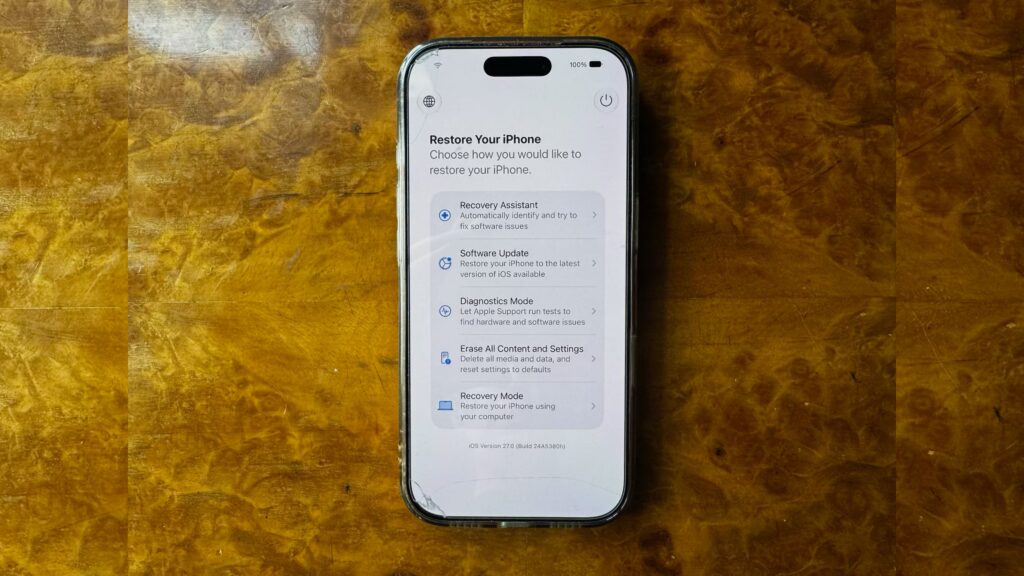
Since iOS 26, a broken iPhone can boot itself into Recovery Assistant, no Mac or PC required. However, you will only be able to do this if your device does not boot and goes into recovery mode on its own.
In iOS 27, currently in beta, Apple removed this limitation and you can now manually boot into a Mac-style recovery screen at any time.
The new recovery mode allows you to troubleshoot, update or erase your device without necessarily plugging it into anything. It can automatically connect to a known Wi-Fi network and displays your battery percentage in the corner of the screen. Here’s how to access it.
How to boot into recovery mode
Accessing Recovery Mode is similar to the equivalent mode on Apple Silicon Macs, and it works the same on iPads running iPadOS 27.
- Turn off your iPhone, then wait about a minute to make sure it’s completely off.
- Press and hold the Side button. The Apple logo will appear as it normally does during startup – continue to hold the button and you will see “Continue maintaining recovery…”.
- Release the button when “Loading recovery options…” appears.
Your iPhone will then boot into the new recovery screen instead of loading iOS.
/article-new/2026/07/loading-recovery-options.jpg)
What Recovery Options Do
The recovery screen offers five options:
- Recovery Wizard: Automatically scans for software problems and attempts to resolve them without requiring additional intervention.
- Software update: Installs the latest version of iOS available for your device, which can be useful if a failed update has left your iPhone stuck in a boot loop.
- Diagnostic Mode: Runs diagnostics to check for hardware and software issues and can recommend repairs if necessary.
- Erase all content and settings: Completely erases your iPhone, just like the equivalent option in the Settings app.
- Recovery Mode: Puts your iPhone into traditional recovery mode to restore it with a Mac or PC, without requiring the usual button-press sequence.
On newer iPhone models, there is also a hidden sixth option. On the recovery screen, if you hold down the key Side button again a context menu will appear showing the option Nearby Device Recovery. This allows you to restore your iPhone using another nearby Apple device, similar to an existing recovery feature that debuted on iPhone 16 models.
Exit the recovery screen
To exit Recovery Mode, press the Power button in the upper right corner of the screen and confirm that you want to reboot. You can also press and hold the physical side button and choose Reboot Or Close.
You shouldn’t need the new Recovery screen often, but it’s worth knowing the button sequence now in case a beta goes wrong or a failed update crashes your iPhone. iOS 27 is currently in public beta, so you can download and try it now before it releases in the fall.
