
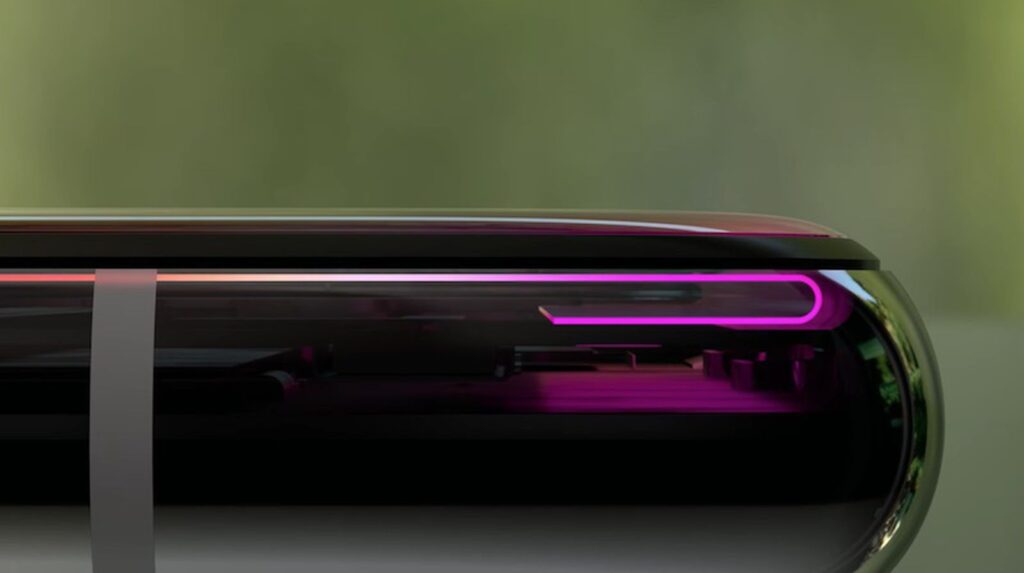
Apple plans to adopt OLED panels capable of displaying a much wider range of colors, according to a new report from research firm TrendForce.
The new panels reportedly cover 95% of the BT.2020 color standard, which describes a much broader color spectrum than the DCI-P3 standard that Apple’s displays currently target. In practice, this means deeper, more accurate reds, greens, and blues. Achieving these richer colors requires more precise control of the light emitted by a display, as well as better energy efficiency. TrendForce therefore expects the next round of OLED competition to rely less on familiar specifications such as brightness and sharpness and more on color balancing, power consumption and overall performance.
Apple first introduced OLED to the iPad Pro in 2024, and the technology is expected to come to the MacBook Pro between 2026 and early 2027. To achieve a wider color gamut, panel makers are changing the chemistry of the layer inside each pixel that actually produces light, moving from a simpler recipe to more sophisticated designs that transmit energy more efficiently between materials.
TrendForce highlights several of these new approaches. A pixel is made to emit a purer and more precise color, which allows a screen to achieve the most demanding BT.2020 objectives. Another adds an “auxiliary” material so that the pixel transforms energy into light more efficiently. A third mixes additional materials to keep a panel shiny longer without wearing out.
This change is also an opportunity for display makers to rely less on technologies they must license from others. All of this is expected to change the relationship between the companies that make displays and those that supply the materials that make them up, with the winners increasingly being those that can offer the best combination of cost, ease of manufacturing and lack of patent licensing.
Apple plans to gradually adopt the most advanced OLED panels on future MacBook Pro, iPad Pro and iMac models, according to the report.
