
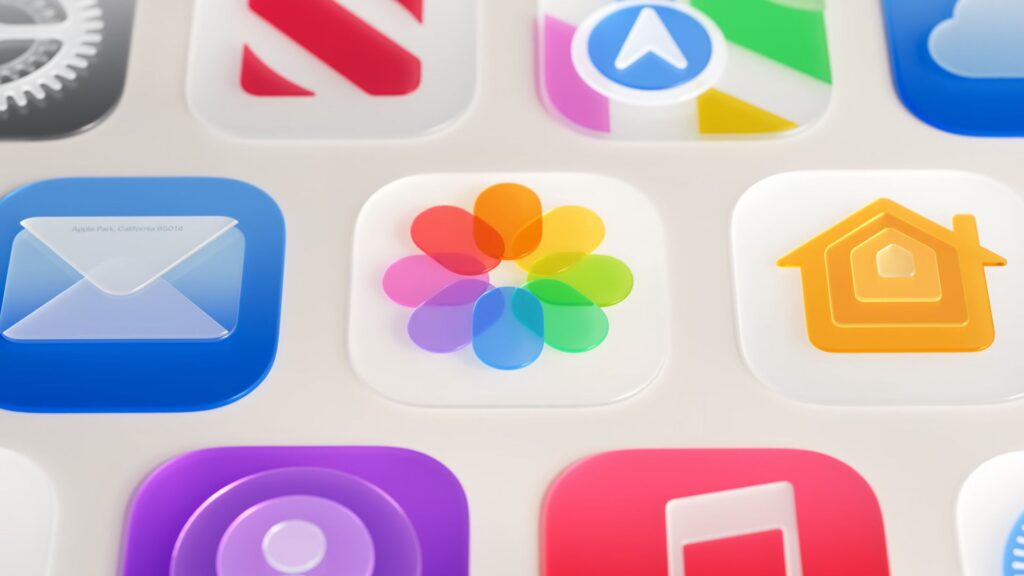
Apple this week detailed a wide range of improvements to Liquid Glass, the translucent design language introduced last year, covering readability, customization, sidebar behavior and app icons.
Announced during the WWDC 2026 keynote and further developed during the State of the Union Platforms, the changes respond to feedback following last year’s rollout by making adjustments to the underlying foundations of how Liquid Glass is built.
At the heart of the updates is tuning how the hardware handles the content behind it. Apple has adjusted Liquid Glass to deliver complex content more efficiently, improving readability across the system. To add greater depth and visual separation, Apple also introduced a dark edge around the Liquid Glass elements, as well as lighter specular highlights.
The main change for users is a new transparency slider in the settings, which allows adjusting the appearance of liquid glass from ultra clear to fully tinted. The control goes much further than a binary toggle, giving users granular control over the extent of the glass effect in the system.
Apps already using Liquid Glass will automatically benefit from many of these improvements when running on iOS 27, without needing to be recompiled. Liquid Glass also adapts to accessibility settings like Reduce Transparency and Increase Contrast.
Apple also fixed the behavior when content scrolls under floating bars. A uniform toolbar now appears at the top in these situations, keeping text readable while improving contrast. The effect is applied automatically for standard toolbars and can be further adjusted using existing scroll edge effect APIs.
Icon rendering has been significantly updated. Apple says icons will now appear sharper and more defined, with new refraction features that can be selectively applied to add character. On macOS and iPadOS, developers also now have access to an API to display icons for key app actions in menus, which are hidden by default.
Icon Composer, Apple’s dedicated tool for designing app icons, has been updated to support creating icons from multiple layers of Liquid Glass. New annotation features allow developers to add refraction or composite content effects, while an interactive preview shows what an icon designed on earlier versions of the operating system will look like.
Apple also made a number of changes specific to macOS 27 Golden Gate, including additional improvements to the sidebar and updates to the window corner radius. For a complete description of the evolution of Liquid Glass on Mac, see our dedicated article.
